
There’s a stretch of the Colorado year — runoff in May, the deep cold in January — when the fishing is either blown out or brutal, and the smartest thing you can do for your angling is put the rod down and pick up a book.
I’m not being romantic about it. Reading about fishing makes you better at fishing. The technical books shortcut years of trial and error. The literary ones remind you why you stand in a cold river at dawn in the first place — which, on the days nothing’s eating, turns out to matter just as much. Here are the ones that have earned a permanent spot on my shelf, sorted by what they’re actually for.
I’ll cop to the obvious: my “shelf” is two shelves and a precarious stack on the nightstand that my wife has stopped commenting on. Anyway.
The short answer: about five books
You need roughly five fly fishing books, not fifty: one writer to fall for the sport (start with John Gierach’s Trout Bum, or Norman Maclean’s A River Runs Through It), one water-reading book (Dave Hughes, Reading the Water), one nymphing reference (George Daniel’s Dynamic Nymphing or Devin Olsen’s Tactical Fly Fishing), one beginner all-rounder if you’re new (Tom Rosenbauer’s The Orvis Fly-Fishing Guide), and one specialist for your home water — for the South Platte, Pat Dorsey’s tailwater books. Everything past that is a hobby inside a hobby.
The writing — books that make you feel it
Start here if you’ve never read fishing as literature, because this is the stuff that gets its hooks in you.
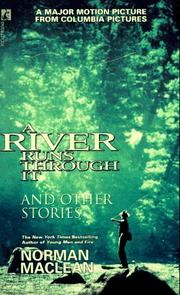 Norman Maclean, A River Runs Through It. The one everybody names, and for once the hype is earned. It’s barely about fishing and entirely about fishing — family, grief, grace, and a Montana river running under all of it. Short, perfect, and it’ll wreck you a little. If you’ve only seen the movie, you’ve missed the prose.
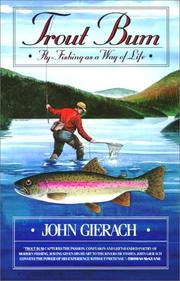 John Gierach — anything, but start with Trout Bum. Gierach (1946–2024) was the dean of American fly-fishing writing and, not coincidentally, a Colorado guy — he wrote from up around Lyons for decades. He’s the patron saint of the way I try to write here: funny, self-deprecating, more interested in the coffee and the drive and the people than in proving he’s the best caster on the river. Read him and you’ll understand what fly fishing actually feels like between the fish.
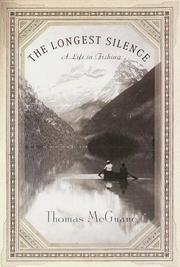 Thomas McGuane, The Longest Silence. The best pure sentences in the genre. McGuane writes about fishing the way other people write about religion, and the title essay alone is worth the book.
Roderick Haig-Brown, A River Never Sleeps. The old soul of the list — a season-by-season meditation that set the template every reflective fishing writer since has worked from.
Robert Traver, Trout Madness and Trout Magic. Traver (a Michigan Supreme Court justice in real life) wrote the funniest, most honest stuff about why we do this. His “testament of a fisherman” gets quoted at every fly-club banquet for good reason.
My take
If you read one book off this whole list, make it Gierach. Everything Rocky Drift Co. is trying to be — knowledgeable without being a know-it-all, funny without being a clown — he did first and better. He’s the model.
The technical ones that actually made me better
These are the books that changed how I fish, not just how I feel about it.
Pat Dorsey — the South Platte tailwater books. If you fish the water I fish, Dorsey is required reading, full stop. He’s the head guide and co-owner at Blue Quill Angler in Evergreen, and his tailwater work is the closest thing the South Platte has to a bible. His core argument — that a tailwater is an engineered ecosystem you read differently than a freestone — reshaped how I approach Deckers and Cheesman. Buy the tailwater volumes before any generic “how to nymph” book.
Ed Engle, Tying Small Flies and Fishing Small Flies. Engle is the South Platte’s resident small-fly and midge authority, and on this river that’s most of the game October through April. If you’ve ever wondered why your #22 zebra midge gets refused, the answer is probably in here. I spent a couple of winters blaming the fish before I admitted it was my tippet and my drift. The book got there faster than my ego did. (Bonus: the foreword to Tying Small Flies is by Gierach — the canon overlaps.)
 George Daniel, Dynamic Nymphing. The book that made tight-line and euro nymphing make sense to a generation of American anglers. If you’re building toward the euro rig, Daniel is where the why lives.
 Devin Olsen, Tactical Fly Fishing. Competition-level nymphing from a Team USA angler, written for the rest of us. I’ll admit a bias here — Olsen is the guy behind the Blowtorch, which is my favorite fly on the planet — but the book stands on its own as the modern euro reference.
Dave Hughes, Reading the Water. The most prolific fishing writer in the West, and his water-reading work is the clearest explanation of where fish hold and why that I’ve found. Pairs perfectly with actually walking a river and looking before you cast — which I, a slow learner, did not do for years.
How many fly fishing books do you actually need?
Honestly, about five. One great writer to fall in love with the sport, one water-reading book, one solid nymphing reference, one beginner all-rounder if you’re new, and one specialist for your home water. Everything past that is a hobby inside a hobby — which, full disclosure, is exactly where I live.
The Colorado shelf
Worth calling out on its own, because if you fish the Front Range you’re lucky — some of the best fishing writers in the country wrote from your backyard. Gierach out of Lyons, Dorsey out of Evergreen guiding the exact water you fish, Ed Engle on South Platte midges, and Landon Mayer, whose sight-fishing and big-trout books are worth it for the Colorado-specific, eyes-on-the-fish tactics alone — he learned them on the same water you’re standing in. You can build an entire fly-fishing education out of writers who knew the South Platte personally. Not many regions can say that.
The casting shelf
Two names, and you don’t need more. Joan Wulff’s Fly Casting Techniques is the clearest explanation of the actual mechanics ever written — Wulff was a tournament-distance champion before she was the grande dame of American fly fishing, and she can break the stroke down in a way that finally makes it click. Lefty Kreh’s casting work is the other half: looser, more practical, built around the handful of principles that fix most bad casts. Reading about casting won’t replace time on the lawn — but it’ll make the lawn time count, and it’ll fix more tailing loops than another new rod ever will.
For a total beginner
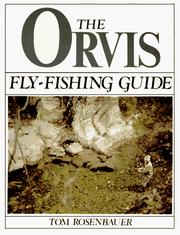 If you’re brand new and want one book that covers everything without drowning you, Tom Rosenbauer’s The Orvis Fly-Fishing Guide is the honest answer. It’s comprehensive, current, and assumes you know nothing — exactly what year one needs. I wish I’d read it in my year one instead of buying three rods and figuring it out the expensive way. Read it first, then graduate to the specialists above once you know what you actually want to get better at.
What I’d skip (or borrow, not buy)
A reading list is only as useful as what it leaves off, so a little honesty. The glossy big-name “complete encyclopedia” tomes are mostly coffee-table weight — pretty, padded, and outdated on gear the day they go to print. Most destination/where-to-fish books go stale fast, because access points and regulations change; borrow those from the library or read the current blog version instead. And you can skip almost any single-technique book whose entire idea fits in a ten-minute video. Buy the writers and the deep technical references — the ones you’ll re-read for years — and rent the rest.
And the granddaddy
Izaak Walton, The Compleat Angler (1653). Nobody’s claiming you’ll learn modern tactics from a 370-year-old book — half of it is about bait and the other half is poetry and tavern songs. But it’s the root of the whole tree, and there’s something grounding about realizing people have been this pleasantly obsessed with catching fish for four centuries. Read a few pages on a snowed-in night.
Frequently asked questions
What’s the single best fly fishing book to start with? For the writing, A River Runs Through It or anything by John Gierach. For actually catching more fish, Tom Rosenbauer’s Orvis Fly-Fishing Guide if you’re new, or Pat Dorsey’s South Platte tailwater books if you fish Colorado.
What should I read to get better at nymphing? George Daniel’s Dynamic Nymphing and Devin Olsen’s Tactical Fly Fishing are the two modern references for tight-line/euro nymphing. For small flies and midges specifically — the South Platte’s bread and butter — Ed Engle.
Are there good fly fishing books specific to Colorado / the South Platte? Yes, and you’re spoiled for them. Pat Dorsey’s tailwater books (he guides the South Platte), Ed Engle’s small-fly work, and Landon Mayer’s Colorado-grounded tactics. Gierach wrote from Lyons, too.
Is it worth reading the old classics? For technique, mostly no — gear and tactics have moved on. For the soul of the thing, absolutely. Maclean, Haig-Brown, Traver, and Walton aren’t reference books; they’re the reason you fall in love with this in the first place.
Bottom line
A fly fishing library does two jobs. The technical shelf — Dorsey, Daniel, Olsen, Engle, Hughes — makes you measurably better on the water and shortcuts a decade of figuring it out the hard way. The literary shelf — Maclean, Gierach, McGuane, Haig-Brown, Traver — makes sure you remember why you bothered. You need both. Stock the technical ones for the seasons you’re fishing hard, and save the writers for the runoff and the deep cold, when the river’s telling you to sit down anyway.