
I’ve been tying at the same bench for a long time now. The bench itself hasn’t changed — same corner, same light, same vise mounted in the same spot. What’s on it has. Slowly, over the years, things that didn’t earn their place got cleared off. What’s left is the stuff I actually reach for.
If a friend asked me to walk them through the bench, this is what I’d say.
The bench at a glance
What I actually reach for: a Renzetti Traveler 2200 true-rotary vise, four Renomed scissors (FS8 SuperCut, FlyTier Straight, FlyTier Curved, and the Super Stinger), five Stonfo tools, a three-bobbin setup — two Rite Bobbin Shortys and a SMHAEN — a Loon Ergo whip finisher, a Kopter bodkin, Semperfli Nano Silk thread (70 denier, 12/0, 18/0), MFC beads and dubbing, and Hanak and Fulling Mill hooks. Everything else got cleared off years ago. The rest of this is why each piece earned its spot — but if you just wanted the parts list, that’s the bench.
The Vise
The Renzetti Traveler 2200 has been here since the beginning. True rotary — the hook shank stays on axis when you rotate, which sounds like a small thing until you’ve done a few hundred ribbed nymphs and you realize how much easier it makes wire wrapping and palmering. Cam jaws that hold anything from a #28 midge to a big streamer hook without fiddling with tension. It’s made in Florida and it shows — the build is solid enough that I’ve never had a reason to think about replacing it.
My goal vise is a Regal. The bulldog jaw, the Massachusetts craftsmanship, the reputation it carries through the tying community — it’s been on my radar for a while. The Renzetti stays until that changes.

The Mat and the Layout
Everything lives on a Loon Outdoors tying mat. Before the mat, tools rolled off the bench constantly. Now everything has a slot and I don’t lose scissors mid-session. The mat sounds like a small thing but it changed how the bench works more than most of the tools on it.
The layout is pretty simple: whatever I’m touching every fly stays within arm’s reach of the vise, on the mat. Everything else lives in drawers.
The Bobbins
I run a three-bobbin setup — two Rite Bobbin Shortys and a SMHAEN. The Rite Shortys are solid brass arm, zirconia ceramic tube, click drag adjustment, and three-quarters of an inch shorter than the standard Rite model, which matters when you’re tying small patterns and a full-sized bobbin starts blocking your view of the hook. The SMHAEN is the third — different feel, ceramic tube, holds its own spot in the rotation. Three bobbins on the mat means three thread colors always live. I never stop a session mid-fly to re-thread.
The Stonfo Elite Bobbin Threader lives next to them — stainless steel, anatomically shaped handle with a knurled thumb-grip, and a fine hooked wire that passes down through the ceramic tube to pull the thread back through. Makes re-threading quick without fighting the tube.
The Scissors
I’ve gone all-in on Renomed. They’ve been making scissors by hand in Poland — tempered, polished, and sharpened by hand — and the edge holds noticeably longer than anything else I’ve used. I have four pairs on the bench, each doing a different job.
The FS8 SuperCut is the workhorse. Their SuperCut blade pairs a serrated edge with a razor edge, which is what makes it cut clean and hold up. Slightly longer blades than a standard tying scissor, so it gives good leverage on tight cuts near the hook eye.
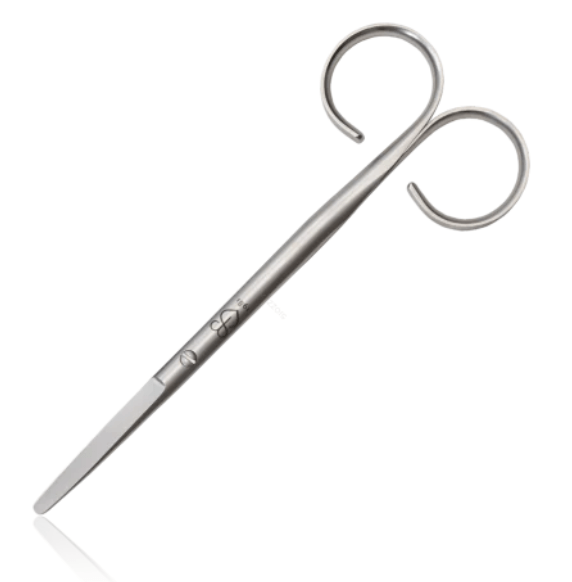
The FlyTier Straight is the all-around medium-work pair — same SuperCut blade, big enlarged loops that are comfortable for long sessions. This is the one I reach for when I’m not doing anything fussy.
The FlyTier Curved handles the precision work — curved SuperCut blade for getting into tight spots and trimming clean on the smallest stuff, where a straight blade fights you.
The Super Stinger is the surgeon. Ultra-thin, pointed, gently curved tips that cut a single fiber if that’s what the fly needs. Delicate — you treat them carefully — but nothing else on the bench cuts that fine.
When any of them eventually need sharpening, Renomed sharpens them. I think of all four as lifetime tools.
My take
Scissors are where I’d tell a new tyer to spend money first, not last. A great vise is nice, but a great pair of scissors is something you feel on every single fly. The Renomeds cost more than I’d like to admit out loud — and they’re the tools I’d grab first if the bench ever caught fire.
The Whip Finisher
Loon Ergo Whip Finisher — yellow handle, smooth rotation. Five wraps, thread locked, done. I use it on every fly I tie. I’ve got big hands, and the ergonomic handle actually feels comfortable in them — a lot of whip finishers feel like a toothpick when you’ve got big fingers. The yellow also makes it impossible to lose on a busy mat, which matters more than you’d think during a long session.
The Stonfo Lineup
This is the part of the bench that makes American tyers squint. Stonfo is an Italian precision tool manufacturer, and somewhere along the way I ended up with five of their pieces on the mat — like I’d been collecting them on purpose. I wasn’t. They just kept turning out to be the best tool for the job.
The Thread Splitter splits the tying thread to build dubbing loops — faster and cleaner than opening a separate loop. The Elite Rotodubbing Twister spins the loop tight using ball-bearing rotation. Together they’re what I reach for any time I need a buggy dubbed body — Walt’s Worm, RS2, soft-hackle thoraxes. The result is tighter and more consistent than what I was getting before.
The Elite Hackle Pliers — gray body, gold tip — handle everything from palmering a soft hackle on a #18 emerger to wrapping marabou on a streamer. One pair that doesn’t crush stems and doesn’t slip.
The Pettine Comb Brush has a fine-toothed comb on one end and a stiff bristle brush on the other. The comb straightens fibers, the brush picks out dubbing where a bodkin would be too aggressive. Gets used more than I expected when I bought it.
The fifth Stonfo piece is the Elite Bobbin Threader, which I already covered up in the bobbins section.
The UV and Finishing Setup
For cutting, I use the Loon Ergo Easy Cutter — razor-blade style, clean cuts on thread, flash, and floss with zero fraying. Faster than scissors for that kind of work.
For UV resin I run two: UV Crafts ultra-thin for Perdigon bodies and thread overlays — hard, clear, no added bulk — and Solarez color resin for hot spots and flash. The Loon UV Torch cures both. Compact, stays on the mat, point it where you need it.
Loon Low Tack Swax is for applying dubbing to the finest threads on small flies and nymphs. The low tack is the point — just enough grab to hold dubbing on a thin thread without building up bulk, which keeps the bodies on small patterns clean and natural.
The Bodkin
One — Kopter Flies, engraved stainless, machined tip. UV resin work, clearing the hook eye, picking thread tags. Lives on the mat and gets used every session.
The Materials
Thread is Semperfli — mostly their Nano Silk gel-spun line, in 70 denier, 12/0, and 18/0. Strong for its diameter, which keeps heads tiny on small flies. Beads and dubbing are almost all MFC — Montana Fly Company. I landed there after trying a few brands and finding their consistency the best for production tying. When you’re tying 50 Blowtorches in a January session, beads that run consistent in size and weight across the batch matter more than they do when you’re tying five.
Hooks are Hanak and Fulling Mill — both European, both sharp out of the box, both consistent across the box. The jig hooks especially; those two are what I trust under a tungsten bead.
What fly tying tools do you actually need to start?
Less than my bench suggests. A vise, one good bobbin, a sharp pair of scissors, a whip finisher, and a bodkin will tie almost everything I fish. The rest of what’s on my mat is stuff I added slowly over years because it earned its place — not gear you need on day one.
Frequently asked questions
Is a true rotary vise worth it for a beginner? For most beginners, no — a solid fixed or basic-rotary vise ties everything. True rotary (like the Renzetti) earns its keep once you’re tying volume and doing a lot of ribbing, palmering, and wire work, where keeping the shank on-axis genuinely speeds you up.
Why so many European tools (Renomed, Stonfo, Hanak)? They’re standard in competition-tying circles and just aren’t as visible in American fly shops. I didn’t set out to buy European — each piece won its spot on performance. The Renomed scissors and the Hanak / Fulling Mill jig hooks especially are a clear step above what I used before.
What should I upgrade first on a basic bench? Scissors, then thread. A great pair of scissors — and good thread like Semperfli Nano Silk for tiny heads — changes every fly you tie. The vise upgrade can wait until you’re tying enough to feel its limits.
The bench doesn’t look like most American tying setups. The tools I ended up with — Renomed, Stonfo, Kopter — aren’t as visible in American fly fishing media as they are in European competition tying circles. They just work, and I found them eventually.
After all this time, the bench has stopped being something I think about. It’s infrastructure. You set it up right, and it lets you tie.
If you want to put this bench to work, start with the patterns I tie most — the South Platte fly box guide is where I’d point you first.