
Here’s the thing about the South Platte: the fish aren’t the problem. The water column is. Fish hold in 3–5 foot runs with strong current pressing against every fly in your rig. Get a nymph to depth in time and you catch fish. Don’t get there in time and you’re just dragging flies past fish that never had a chance to eat — which, for years, was most of my drifts. I had the fish dialed and the depth all wrong.
The Perdigon fixed that for me. It solves the depth problem better than any other pattern I’ve fished on this river.
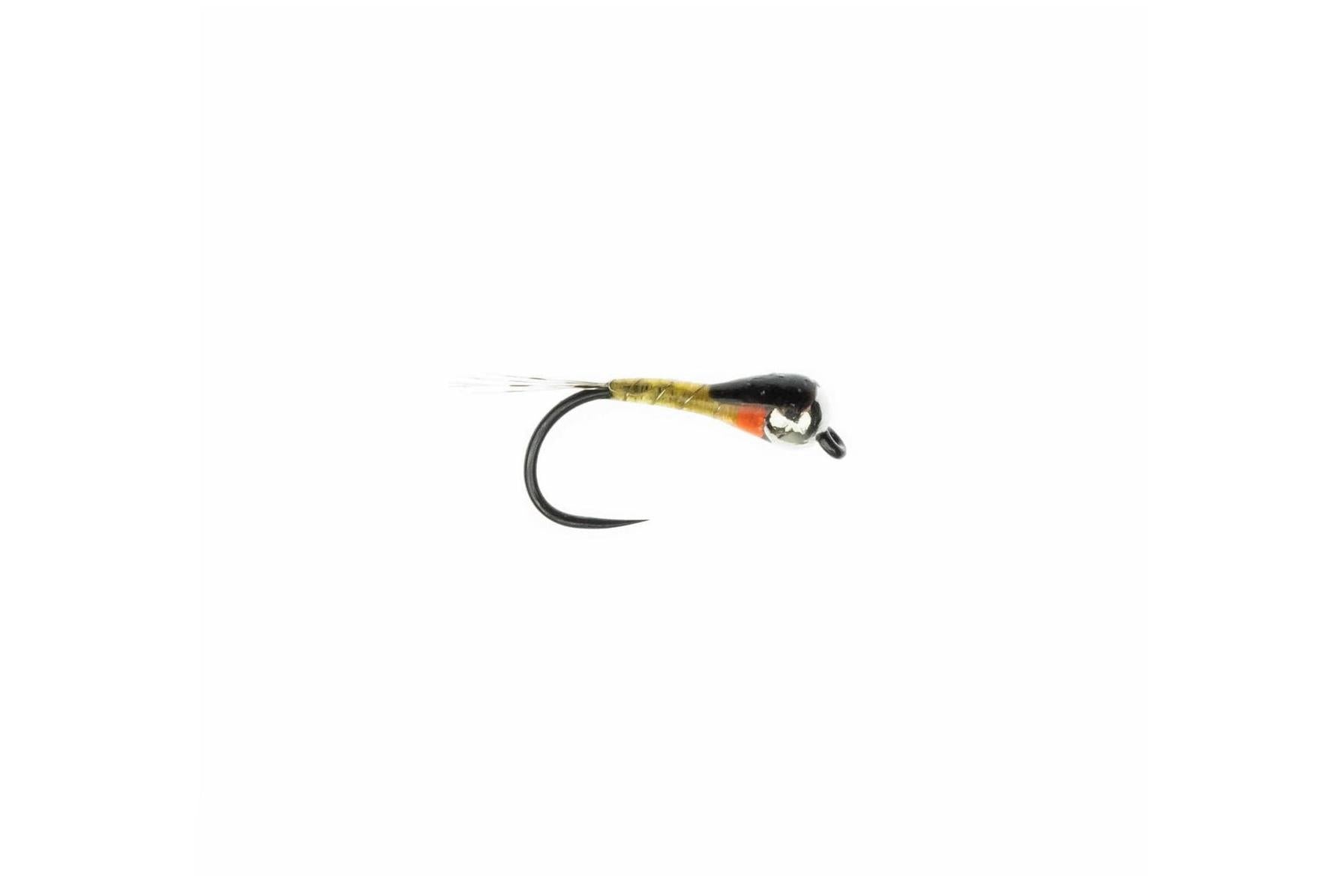
“Perdigon” is Spanish for “pellet” or “buckshot” — and that’s accurate. The UV resin coat on the body makes it perfectly hydrodynamic: nearly zero water resistance, sinking 40% faster than a comparably-weighted traditional nymph. It was developed collectively by the Spanish national fly fishing competition team in the late 1990s and early 2000s, refined through international competition exposure, and arrived in American guide boxes through the tight-line nymphing movement. It’s now standard on virtually every competitive euro angler’s system.
The short answer
The Perdigon is a Spanish competition nymph whose UV resin-coated body sinks about 40% faster than a comparably-weighted traditional pattern, which is why it wins the anchor slot on South Platte tailwater — fish it as the point fly on a euro rig, tied on a barbless competition jig (#16–18 here) with a gold slotted tungsten bead and a fire-orange hot spot, with a lighter dropper like an RS2 18–22 inches above. It shines at Deckers from late fall through early spring, dominates the fast pocket water of Cheesman Canyon, and works the current tongues on the Dream Stream in #18–20.
It isn’t the fly I daydream about at the vise — it’s just the one that’s already on the bottom before the seam ends.
The Recipe
The Perdigon is a construction project, not a fly tying project. The UV resin coat is the defining element — without it, you just have a slim PT variation. With it, you have a different tool entirely.
Hook: Competition jig, barbless — Umpqua C400BL, sizes #14–18 (South Platte: #16–18)
Bead: Faceted slotted tungsten, gold, 3.2mm for size 16
Weight: Lead wire, .015”, optional under bead
Thread: Veevus 16/0, white — forms the slim tapered body
Tail: Coq de Leon, dark speckled pardo, 6–8 fibers
Rib: UTC Brassie Ultra Wire, gold
Body: Tying thread only — smooth, slim, with the thread showing the taper
Hot spot: UTC Ultra Thread 70 Denier, fluorescent fire orange, 2–3 wraps at collar
Finish: UV Clear Fly Finish (thin), cured over entire body — this is what makes it a Perdigon
The body must be smooth before you apply resin. Lumps under the coating become permanent. Keep the thread wraps tight and even. Apply two thin coats rather than one thick coat. The resin should flow into every layer of thread wrapping.
Colors beyond the original: olive, red, and black are South Platte-viable. Red fishes well in winter when fish key on red midges. Olive covers baetis nymph seasons.
When It Matters on the South Platte
Deckers fishes the Perdigon year-round, but it earns its place from late fall through early spring. When flows drop below 150 cfs and fish compress into the deepest holding lies, this is the fly you use as your anchor — the lead nymph dragging everything else to the bottom with it. Minturn Anglers lists it as a top-5 early spring South Platte pattern in olive, red, black, and hot orange, sizes 16–22.
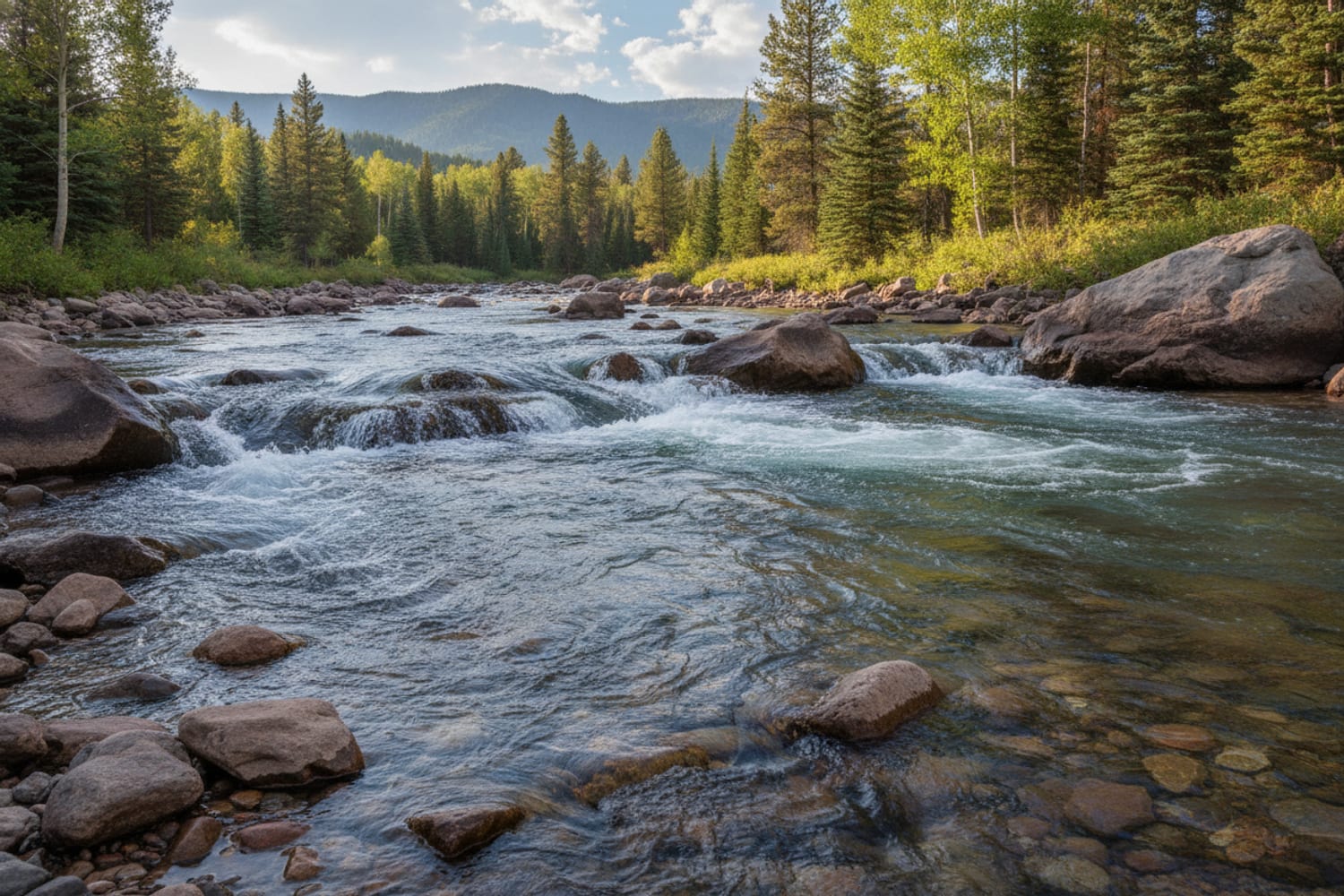
Cheesman Canyon is where the Perdigon really dominates. Fast pocket water, pool heads, current tongues — anywhere the current is too aggressive for a bulky nymph to reach depth before the fish’s window closes. The canyon’s broken structure rewards fast-sinking precision over everything else.
Dream Stream at sizes 18–20 in the current tongues between weedy flats. Don’t fish it in the slowest flat water — it sinks too fast and buries in the weeds. Work the transitions where current accelerates between beds.
My take
My rule anymore is simple: when I’m not sure my flies are reaching the fish in time, the Perdigon goes on point and the doubt goes with it. I spent years as the guy with the right fly at the wrong depth — fish dialed, drift wasted — and this pattern is what ended that era. It isn’t the fly I daydream about at the vise; thread and resin don’t stir much soul. But the anchor slot in my rig is a job interview, and the Perdigon keeps winning it on the only qualification that counts: it’s at the bottom before the seam ends.
How to Fish It
Pure euro nymph. French leader, no indicator, tight-line contact, sighter above the tippet. The Perdigon is always the point fly — the heavy anchor at the bottom of your rig. Drop a lighter pattern 18–22 inches above it: RS2, Juju Baetis, or small midge pupa.
5X–6X fluorocarbon on the tippet section. The fly sinks so fast that heavy tippet matters less than with slower patterns — sink rate is determined mostly by the tungsten bead and the slick body.
Watch your sighter for any speed change or hesitation. Spanish and French competition anglers typically fish the Perdigon with short, precise drifts and frequent re-casts rather than long swings. Get it to depth, hold position through the seam, lift and re-cast. Repeat.
Here’s the part I can’t fully explain: the Perdigon doesn’t look much like anything specific. It looks generally edible — segmented body, small profile, falling fast — and somehow that’s enough. Fish that have turned up their noses at fifty of my midges will eat a Perdigon without a second thought. I’ve made peace with not knowing why. Some flies you fish because the entomology checks out; this one I fish because it just keeps working, and I’ve learned not to argue with the net.