
In this guide
Mid-June at Deckers, mid-morning: the water glasses off and a pod of fish starts working a seam tight to the far bank. You’ve got a perfect parachute PMD on, and you make what feels like a perfect drift. The lead fish lifts, looks, and goes back down without opening its mouth. So does the next one. Four flies later, so does your morale.
What usually moves fish like that is a scruffier, lower-riding fly with a wisp of fiber hanging off the back. Not a dun. A bug stuck halfway out of its shuck — which is what those trout were actually eating the whole time you were insulting them with a pretty adult.
That fly is the PMD Sparkle Dun, and during a Pale Morning Dun hatch on a Colorado tailwater it’s the first dry to reach for.
Here’s the pattern, when to use it, and how to read the water so you know it’s the right fly before you’ve burned through your morning.
Why the PMD Sparkle Dun Works — The Shuck Trigger
The Sparkle Dun is Craig Mathews’ pattern, tied at Blue Ribbon Flies in West Yellowstone. He built it on top of Al Caucci and Bob Nastasi’s Comparadun — the no-hackle, deer-hair-wing silhouette they introduced in their 1970s book Comparahatch — and swapped the tail for a trailing shuck. That one change was a direct response to a problem every dry fly angler eventually faces: trout refusing perfectly tied dun imitations during an active hatch. The morning at the top of this post is that problem in its most common form.
The insight behind the shuck is that fish aren’t always eating fully-emerged adults. They’re often eating emergers — bugs still partially encased in their nymphal shuck, stuck in the film, vulnerable and available longer than a dun that rides the surface for a few seconds and flies off.
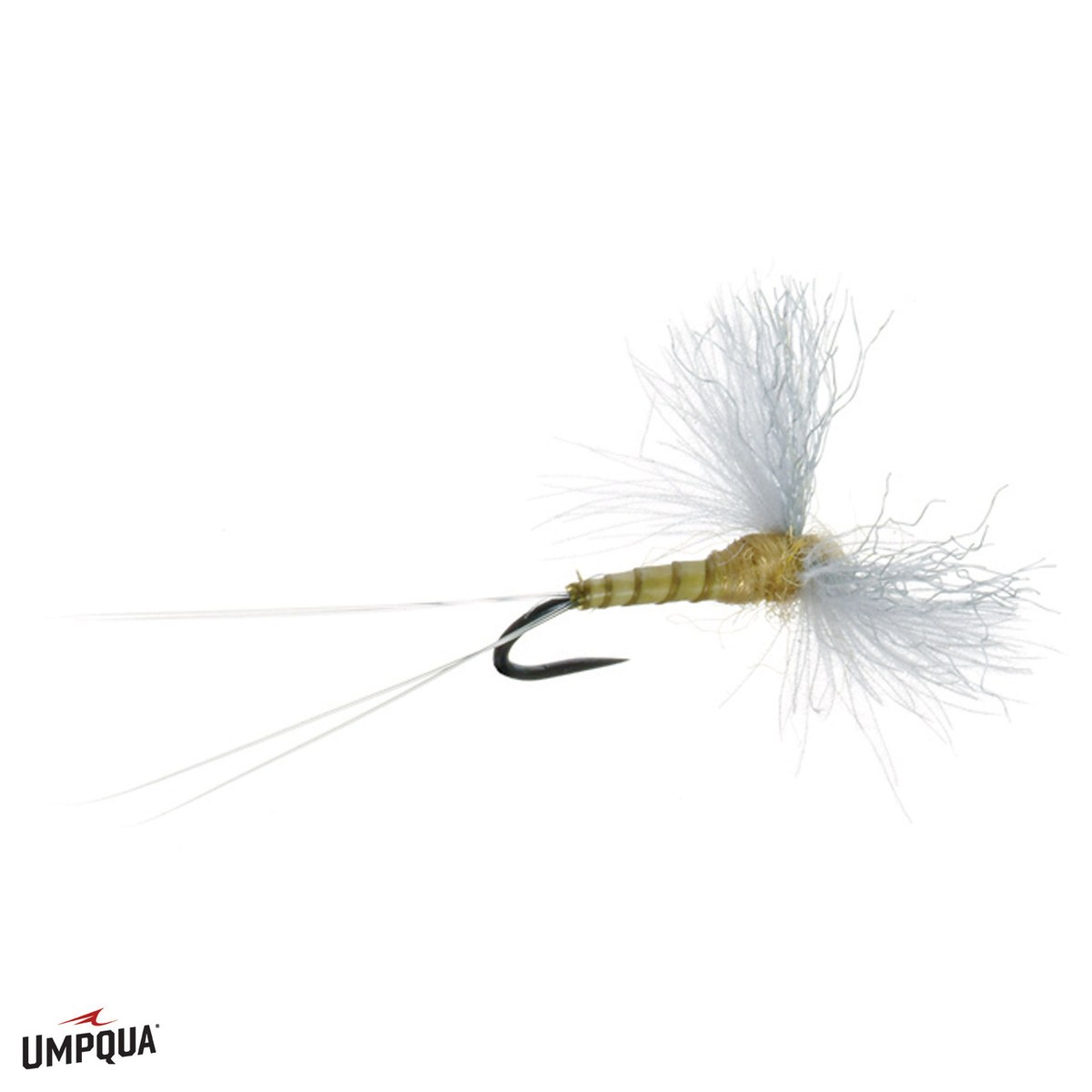
The Sparkle Dun solves this by adding a trailing shuck of Z-lon or Antron behind the hook bend. That wisp of synthetic fiber imitates the nymphal case being shed during emergence. It doesn’t look exactly like a shuck under a microscope — it doesn’t need to. It reads as “emerger” to the trout, and that’s enough. Pair that with a deer-hair wing tied comparadun-style (splayed flat, not upright-and-divided), and you get a fly that sits low in the film, flush with the surface, presenting the profile of a bug that hasn’t quite made it out yet.
That profile is exactly what Ephemerella trout are keyed on during the peak of the hatch. The duns that pop and immediately take flight are hard to eat. The ones stuck in the shuck, drifting and struggling? Those are the ones the fish can count on.
PMD Entomology — What You’re Actually Matching
Pale Morning Duns belong to the genus Ephemerella, primarily E. inermis and E. infrequens in Colorado. They’re medium-sized mayflies — hook sizes #16–18 cover the naturals on most tailwaters, and #18–20 is the better bet for Deckers and Cheesman where the fish are pressured and have learned to be picky about size. Go down before you go up.
The body color gets debated endlessly, usually by two guys who are both catching fish. The naturals shade from pale yellow-olive to pinkish-cream depending on the individual, the specific population, and how you’re reading the light. Carry both a yellowish-cream and a slightly more olive version. The pale yellow-cream body is the usual starting point on Colorado tailwaters, but it’s worth having options when fish get weird about it — and they will get weird about it, right when you’ve decided you’ve got them figured out.
The hatch on tailwaters typically runs from around 10 a.m. through noon — later than you’d expect for a “morning” dun, and that timing holds fairly reliably at Eleven Mile Canyon and Deckers through the mid-June peak. At Cheesman, the canyon topography and water temperatures can push emergence a bit earlier or compress it. The spinner fall comes later in the day — afternoon into evening — as females return to deposit eggs and fall spent — but that’s a different fly (flush-floating spinner with spent wings) and a different presentation problem.
The PMD season on Colorado tailwaters runs June through August. June is the peak month. Flows and water clarity matter: once the upper South Platte pushes much past 250 CFS the surface game gets harder across the tailwater system, and lower, clearer flows concentrate surface feeding and make the dry-fly game worth playing.
PMD Sparkle Dun Tying Recipe — Tailwater Specs
This is the pattern with the adjustments that matter for Deckers and Cheesman, whether you tie your own or pick them out of a shop bin. Nobody needs to re-invent anything — Mathews’ original is proven, and the most common way to ruin it is tying it too full. These are the tailwater-specific details that matter when fish have seen every version of this fly.
| Component | Material | Notes |
|---|---|---|
| Hook | TMC 100 or equivalent dry fly | #18–20 for tailwaters; #16 for less-pressured water |
| Thread | 8/0 or 70-denier UTC, pale yellow or cream | Keep thread thin — thread bodies look better than bulky dubbing on small hooks |
| Shuck | Amber or tan Z-lon / Antron | Short — about half the hook shank length. Don’t overdo it |
| Body | Pale yellow-cream dry fly dubbing, or thread body | Thread-only bodies on #20–22 produce a sleeker, more natural silhouette |
| Wing | Natural coastal deer hair, comparadun-style | Flared and splayed, not clumped. Low profile is the point |
| No hackle | — | The comparadun wing and deer hair support the fly. No hackle wound |
Thread-body variant: On #20 and smaller, skip dubbing entirely and build the body from the thread itself, tapering slightly thicker toward the thorax. It looks cleaner, sits lower in the film, and is faster to tie. The fish don’t miss the dubbing.
Wing density: This is where most tied versions fail. Too much deer hair and the wing is stiff and unnatural; too little and it won’t flare properly. The goal is a thin, translucent fan. Hold the stack up to the light before tying it in — if you can see through it, you’re close.
Shuck length: Keep it short and sparse. A long, dense shuck looks like a tail, not a shuck. You want a suggestion of something being shed, not a visible appendage.
How to Read Rise Forms During the PMD Hatch
This is the part that saves you four fly changes, as long as you read the water before you read the fly box.
During a PMD hatch, fish will often be rising steadily, but that doesn’t mean they’re eating adult duns. The rise form tells you what’s happening below the surface of their decision-making. Learn to read it and you stop blaming the pattern for what is usually a presentation or a depth problem.
Quiet, deliberate sipping rises: Head barely breaks the surface. Maybe a subtle bulge. This fish is eating in or just under the film — emergers or cripples. Fish the Sparkle Dun flush in the film or consider a wet-fly emerger just subsurface.
Head-and-tail roll: Dorsal fin showing, slow roll, no splash. Also an emerger or cripple take. The fish is tipped up in the film and barely moving. Dead-drift, long tippet, get the fly to arrive ahead of the leader.
Splashy, aggressive rise with an audible pop: Fish is chasing something active. During a PMD hatch this is rarer, but it can indicate caddis mixed in, or the occasional dun the trout has to hurry to grab before it flies. Try the Sparkle Dun, but if refusals persist, suspect a different species entirely.
Subtle bulge with no break of the surface: Nymphs being eaten just under the film. No dry fly is going to work here. Barr PMD Emerger fished as a wet or an RS2 in the film — this is a subsurface game.
The key takeaway: most PMD rises that look like dun takes are actually emerger takes. The Sparkle Dun covers both. When fish are working steadily during a PMD hatch and ignoring a standard parachute pattern, go to the Sparkle Dun before you change anything else.
My take
If I’m carrying one PMD dry, it’s the Sparkle Dun — not because it’s clever, but because it covers the meal these fish actually get the most chances at. Sparse is the secret, and sparse is exactly what most versions aren’t; a thin wing and a stub of a shuck out-fish the pretty, overdressed ones every June. Check the wing against the light before a fly goes in the box, whether you tied it or bought it. And when the morning window opens at ten, I’d rather have a dozen sparse ones in #18–20 than a box of anything else.
How Do You Fish a Sparkle Dun on Tailwater Flats?
The fly is only half the problem. Technical tailwater fish — the ones holding in the glassy flats at Cheesman and the slower runs at Deckers — refuse based on presentation more often than pattern. They’ve been caught before. They’re not stupid.
Leader and tippet: Start with a 9-foot 4X tapered leader and add 2–3 feet of 6X fluorocarbon tippet for #18–20 flies. On the flattest, clearest water, consider 12 feet of overall leader to keep the fly line off the fish’s window. 6X handles most situations; if you’re getting refusals on a good drift, go to 7X before you change flies.
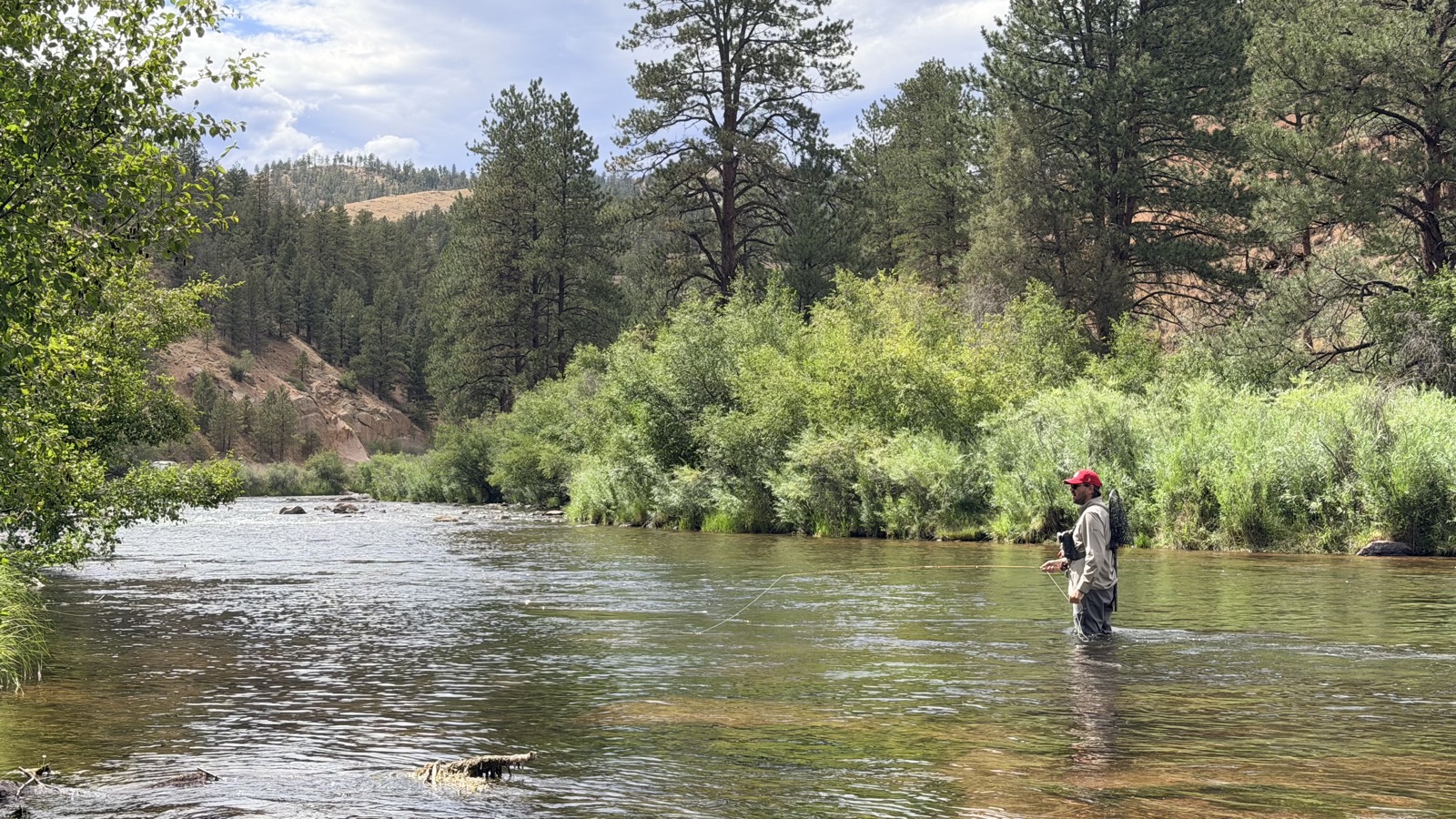
Position above the fish, cast downstream. The downstream presentation is the most reliable approach on tailwater risers. Position upstream and to the side of the fish, cast down-and-across, and use a reach mend or pile cast to get slack into the leader. The fly arrives at the trout before the tippet does. Everything else follows from that. Any presentation where the leader passes over the fish first is a wasted cast.
Mend early, mend in the air. The reach mend — tipping the rod upstream as the loop unrolls — is worth more than any on-water mend because it puts slack where you need it before anything lands and disturbs the fish. Once the fly is on the water, every mend risks a micro-twitch that triggers a refusal.
Dead drift length: On a good downstream presentation, you should be able to get 4–6 feet of clean drift over the fish. If you’re mending repeatedly to extend a short drift, your position is wrong. Move upstream, improve the angle, reset. Flogging a fish from one bad spot for twenty minutes out of pure stubbornness is a contest the fish wins every time, and your knees lose.
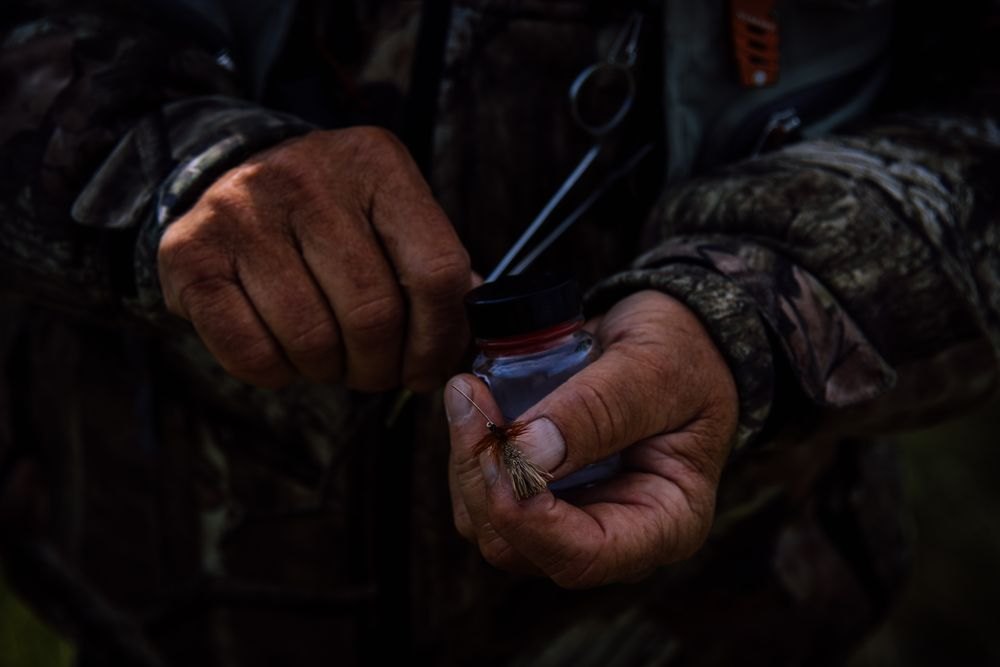
Floatant: Use it, and use it right. Apply floatant before the fly ever touches the water. After a take (successful or not), shake out the fly, hit it with a desiccant powder, blow it dry, then re-apply. A waterlogged Sparkle Dun riding in the film instead of on it looks like a drowned fly, not an emerger — well, sometimes that’s good, but on a fresh cast to a fresh fish you want control over that choice.
What Else to Have on the Water During PMD Season
The Sparkle Dun is the primary tool during the hatch, but it shouldn’t be the only thing in the box. Here’s a June PMD morning lineup:
Pre-hatch (before surface activity begins):
- PMD nymph #16–18 (Pheasant Tail, Hare’s Ear variants)
- RS2 #18–20 as a dropper — trout are staging for the hatch and eating emerging nymphs
During the hatch (10 a.m. to noon):
- PMD Sparkle Dun #18–20 — primary dry
- PMD Comparadun #16–18 — for fish eating higher in the film or on fully-emerged duns
- Barr PMD Emerger #18 — when fish are bulging sub-surface and won’t take a dry (I go deeper on this pattern in my Barr’s Emerger guide)
Post-hatch / spinner fall (afternoon):
- PMD spinner #18–20, flush-floating with spent wings
- Trico spinner #20–22 if there’s Trico activity mixing in later in summer
The transition from nymphing to dry fly is the most important read of the day. Watch the surface, not the clock. When you see the first consistent rises, tie on the Sparkle Dun. Until then, nymph.
Flows and Conditions to Watch For
Before you commit to a PMD dry fly morning, check flows. The USGS gauge for the South Platte at Deckers (station 06701900) is the reference number for the whole Deckers–Cheesman Canyon corridor; it tells you what you’re walking into. For surface activity and dry fly fishing, lower and clearer is almost always better. Once flows push past 200–250 CFS on the upper sections, you’re still catching fish — nymphing produces — but the dry fly window tightens significantly. Duns get pushed down faster, fish hold tighter to the banks, and visible surface feeding is harder to find.
Cheesman Canyon is more sheltered and can hold good dry fly fishing at slightly higher flows than the open water at Deckers, simply because of the canyon structure and slower pockets. But neither fishes well dry when the water is blown out or heavily colored. Check before you go — it’s 90 minutes from Colorado Springs, which is a long way to drive to find out the river is chocolate milk.
Always check current Colorado Parks and Wildlife regulations before fishing. Cheesman Canyon has special regulations that change, and the rules on the South Platte tailwater sections are not uniform.
Frequently Asked Questions
Q: What size PMD Sparkle Dun should I fish on the South Platte at Cheesman Canyon? Size #18–20 is the right range for Cheesman Canyon and Deckers. These are technical, heavily-pressured fish that key on accurate size matching. Start with #18 and drop to #20 if you’re getting refusals on a clean drift. #16 is appropriate for less-pressured water or earlier in the season when naturals are slightly larger.
Q: When do PMDs hatch on Colorado tailwaters? PMD hatches on Colorado tailwaters run from mid-June through August, with peak activity in June. On tailwaters like the South Platte and Eleven Mile Canyon, emergence typically begins around 10 a.m. and runs through noon. Flows below 250 CFS produce the best surface activity.
Q: How is a Sparkle Dun different from a Comparadun? The Sparkle Dun adds a trailing shuck of Z-lon or Antron behind the hook bend, imitating a mayfly still partially encased in its nymphal case during emergence. The Comparadun omits the shuck and presents a fully-emerged dun profile. Both use deer-hair wings with no wound hackle. The Sparkle Dun is more effective when fish are feeding on emergers in the film; the Comparadun works when fish are taking adult duns riding higher on the surface.
Q: What tippet should I use with a PMD Sparkle Dun on tailwaters? Use 6X fluorocarbon for #18–20 Sparkle Duns on tailwater. Start with a 9-foot tapered leader extended to 12 feet total with 6X. If fish are refusing on clean drifts, go to 7X before changing the fly — tippet visibility is more often the problem than the pattern.
Bottom line
June is a short window. The PMD hatch fires hard, lasts a few weeks at its best, and the tailwater fish get educated fast. A well-tied Sparkle Dun on a clean downstream drift to a rising fish — that’s about as good as dry fly fishing gets in Colorado.
Tie a dozen before you go, and tie them sparse. Then watch the rise form before you watch your fly box. The fly is the easy part. Reading the water is where the morning is won or lost — and I cover that in detail in how to read water on the South Platte, if you want the next piece of this.