
Part 2 of The Tight Line — my series on fishing a tight-line rig on South Platte tailwaters. Start with Part 1.
There are two different reads happening every time I walk up to a run, and and for a long time I only really knew one of them.
The first is the one everybody teaches: reading water. Where do the trout hold? Find the seam, the foam line, the soft cushion next to the food lane. I’ve written that up in detail — the Deckers-specific version is pocket water vs pool tailouts, and there’s a general where trout hold piece too. If you haven’t internalized that yet, start there. This post assumes you already know how to find the lie.
The second read is the one that took me longer, and it’s the one that matters most on a tight line: reading the bottom. Not where the fish is holding side to side, but how deep the water is, how the streambed rolls and steps and drops under the surface, and — the whole point — where my flies are going to actually tick along the bottom as they come through. On a mono rig with no indicator, you’re not setting a bobber to a depth and forgetting it. You’re trying to thread two weighted flies through a slot you can’t see, keeping them an inch or two off a bottom that’s changing the entire drift. Reading water finds the fish. Reading the bottom puts your flies in front of its face instead of three feet over its head.
The rig underneath all of this is the same one from Part 1 — a mono rig on the Diamondback 10’7” 3-weight, a Blowtorch on point, no fly line and no indicator, and the full recipe lives in building a euro rig from scratch. Nothing about it changes in this post. What changes is where I’m trying to put it — which turns out to be the part I never thought about at all, on the theory that the river was basically a bathtub with fish in it. Here’s how I read the part of it you can’t quite see.
Depth is the variable that actually moves fish
On a tailwater, most days the fish aren’t refusing your fly because of the pattern. They’re refusing it because it never got to them. A trout on the South Platte holds tight to the bottom in cold, clear water, and it won’t usually rise two feet to chase a nymph drifting up in the faster current over its head. The bug has to come through its window — that bottom eight inches to a foot of the water column where the fish is parked and the current is slowest. On a big boulder run that band might be eighteen inches deep; on a skinny Dream Stream gravel slot it’s about the length of your hand. Either way it’s narrow, and it’s always on the bottom.
That’s why depth is the read I obsess over. Side-to-side, I can usually find the lie. But a run that’s knee-deep at the head and waist-deep in the bucket twenty feet down needs a different drift through each piece, and if I fish the whole thing with one setup, I’m fishing one of those depths right and the other one wrong. I used to march down a run on one setup, feeling clever, catching the fish in the easy water while every bucket quietly skunked me. Reading the bottom is how I keep the flies in the window as the window itself gets deeper and shallower under me.
Read the surface to read the bottom
You can’t see the streambed in three feet of moving water, but the surface tells on it constantly once you know what to look for. The water writes the bottom on its own ceiling.
- A boil or a welling-up — a smooth dome that rises and flattens — is water hitting something and deflecting up. That’s a rock, a shelf, or the upstream face of a drop. The fish sits in the cushion in front of it or the soft pocket behind it, and your flies need to get down before they arrive, not over the top.
- A slick in otherwise textured water is usually deeper, slower water — a bucket or a trough. The surface goes calm because the current underneath has room to slow down. Slicks are where I expect to find the deepest part of the slot, and where I’ll need the most weight or tippet to reach bottom.
- A line of broken, choppy water that suddenly smooths out is a depth change — a shelf or a drop-off where shallow steps down into deep. That edge, where the riffle drops into the run, is a feeding shelf, and the bottom falls away right there.
- Differences in water color read depth directly. Darker water is deeper. On a clear day at Cheesman you can read a bottom contour by color alone — the slot shows up as a darker ribbon winding through the lighter cobble, and that ribbon is exactly where I want my flies tracking.
Stand at the bottom of the run and watch the surface for a minute before you step in — same discipline as reading water for the lie, just pointed at depth instead. The boils, slicks, and color changes are a topographic map of the bottom, drawn in real time. After enough days you stop decoding it consciously and just see the shape of the riverbed under the texture. I used to treat this minute as an excuse to finish my coffee before fishing — turns out the coffee was incidental and the standing still was the skill.
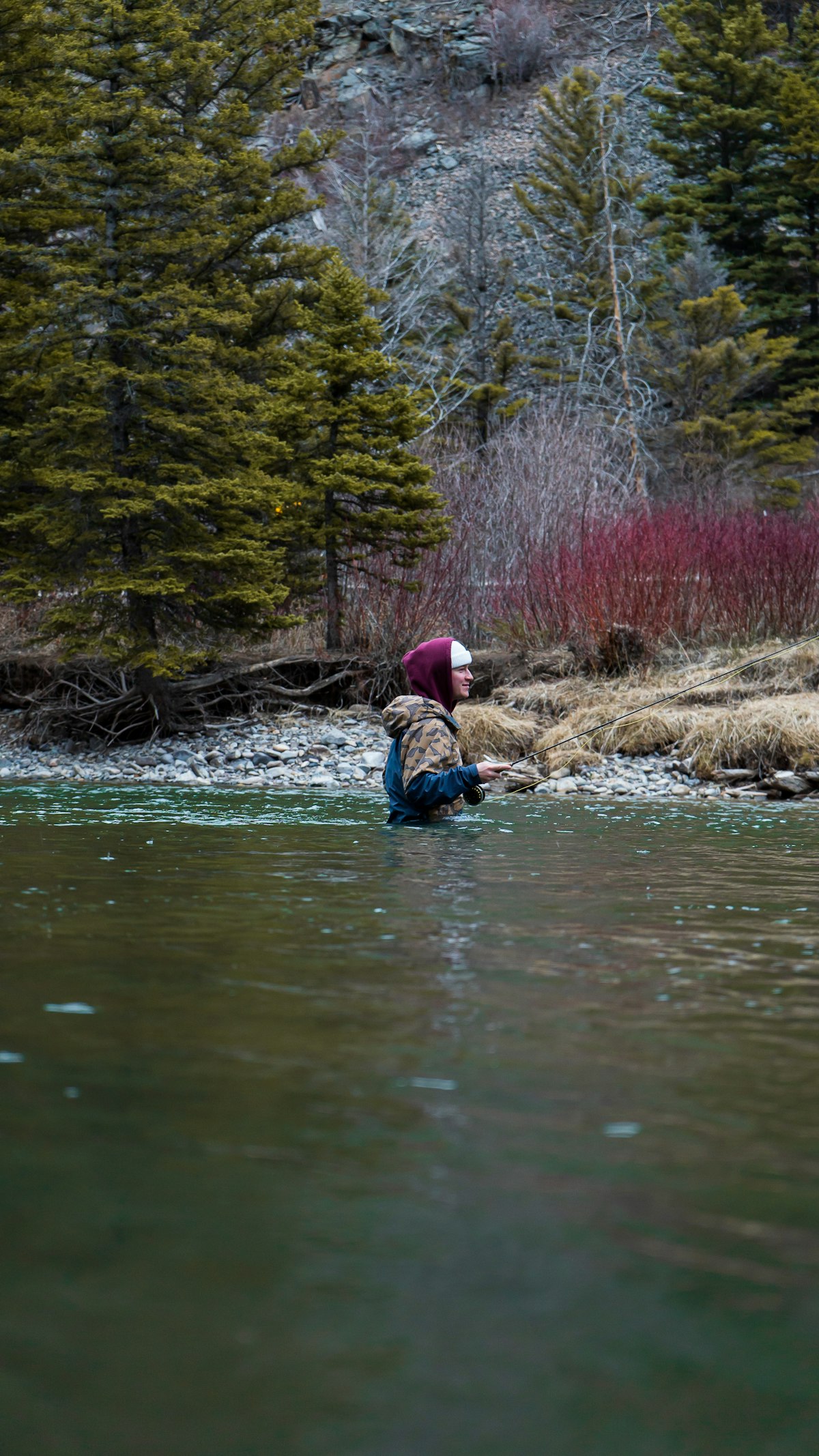
The seam isn’t just side-to-side — it’s vertical too
Here’s the piece that reframed all of this for me. We talk about the seam as a line on the surface where fast water meets slow water, left to right. But there’s a second seam stacked underneath it, and it runs top-to-bottom rather than bank-to-bank: the boundary between the faster water up top and the slow layer scraping along the streambed. Part 1 is about detecting that layer with the sighter. This is about knowing where it goes.
Because it doesn’t run flat. That bottom seam follows the shape of the riverbed, which means it climbs over every shelf and dives into every bucket, and the trout goes with it. The whole reason a tight-line drift works is that it gets the flies down into that slow layer and keeps them there, ticking, while the sighter rides up in the faster water above. When a shelf drops into a bucket, the seam drops with it. Reading the bottom is really reading where that slow bottom layer goes, so you can follow it down with weight and tippet instead of skating your flies along the top of it. Once that clicked, half the “dead water” I’d written off turned out to be perfectly good buckets I’d been mowing my flies over. Nobody was home up top. They were a foot below, watching me work.
How the bottom changes the drift, foot by foot
Once you can see the contour, you can predict what your flies will do before they do it — which is the entire advantage of a tight line over a static indicator.
Coming off a shelf into a bucket, the bottom drops away and your flies, if they were ticking, suddenly aren’t — there’s a foot of new water under them and they’re now riding high through the deepest, best part of the slot. This is the most common way I fish a bucket badly. The fix is to feel for the moment the ticking stops and give the rig a beat — lead a touch slower, let the flies sink into the new depth — so they’re back on the bottom by the time they reach the heart of the bucket where the fish is sitting.
Climbing out of a bucket onto a tailout shelf, it’s the opposite: the bottom comes up to meet the flies and they start dragging and hanging up. Now I lift the rod tip and lead a little higher to walk them up and over the shelf without snagging, because the fish staging on that shelf lip wants the fly drifting just over the gravel, not plowing into it.
Through even, walking-pace cobble — a clean run with a consistent bottom — the drift is forgiving and the flies ride at a steady depth. This is the easy water, and it’s where you should dial in your weight first before taking that setup into the technical stuff.
The point is that one run is rarely one depth. A good drift through a contoured run is a series of small adjustments — a beat slower here to drop into the bucket, a lift there to clear the shelf — all of it driven by a picture of the bottom you built from the surface before you ever cast. It sounds like a lot to track, and it is at first — then it becomes the thing your hands do while your brain wanders off to wonder whether you locked the truck.
Tune weight and tippet to ride the slot
Reading the bottom only pays off if you can act on it, and the two levers are weight and tippet length. They do different jobs and it’s worth keeping them straight.
Weight — the tungsten bead on your point fly, or a heavier point fly entirely — sets how fast the rig gets down and how hard it holds the bottom in current. Deeper, faster water needs a heavier point fly. I made the case in Part 1 that a refusal is usually a depth problem wearing a fly-pattern costume; this is the lever you pull once you’ve accepted that. Before I swap the Blowtorch for something else, I go up a bead size or drop in a heavier point fly and re-read the drift. The full weight-and-shot argument is in getting your nymphs down (coming later in this series).
Tippet length — the distance from your tippet ring or sighter down to the point fly — sets how deep the rig can hang below the sighter before the sighter itself gets dragged into the water. Short tippet for shallow shelves, longer tippet for deep buckets — that’s tippet length. There’s a second tippet lever people miss: diameter. Thinner tippet cuts the current and sinks faster at the same weight, so dropping from 5X to 6X gets you down without adding a heavier fly — which matters on the flats, where a bigger bead is the thing that spooks the fish. When I move from a knee-deep riffle into a waist-deep bucket, I’ll often add tippet length rather than weight, because I need the flies to reach a depth the current isn’t fighting much, not punch through heavy flow. On the South Platte I’m constantly adjusting tippet length run to run, sometimes within a run, to match the depth I read off the surface.
And flow rewrites the map. The same run reads nothing alike at 80 cfs and 300 — higher water buries shelves, drowns the boils that gave the rocks away, and shoves fish to the soft inside edges, so you need more weight and a tighter, shorter drift to hold any bottom at all. Skinny flows shallow those same buckets up and sharpen the color contrast, and you can back off weight before you plow gravel. Read the bottom for the flow you’re standing in, not the one you fished last month — I’ve fished June weight in September water more than once, and the fish were not impressed.
Get both right and the flies ride the slot — down in that slow bottom seam, ticking the contour, in the window. Get weight too light or tippet too short and you’re fishing over the fish without knowing it. My default error is fishing too light — I hated losing flies, so I under-weighted to stay clean and proceeded to clean nothing. The fix was accepting that if I’m never ticking bottom and never losing a Blowtorch to a rock, I’m not deep enough to catch one either. Snagging the bottom now and then is the toll. Pay it.
Use the sighter to confirm you found the bottom
This is where it ties back to Part 1. You read the surface, you picture the bottom, you set your weight and tippet — and then the sighter tells you whether you got it right, because the sighter is an instrument, not an indicator.
Three things the sighter reports about the bottom:
- The tick. When your point fly is actually touching down and bouncing along the bottom, you feel and see it in the sighter — a soft, irregular stutter, a little catch-and-release as the bead taps gravel. That stutter is the sighter confirming you’re on the bottom. No tick at all and you’re riding too high; constant grab and you’re too heavy and hanging up.
- The speed. The bubble race from Part 1 — sighter losing ground to the foam on top — is the clearest “you’re down” signal there is, and it’s the one I check first when a contour I read confidently produces nothing. Keeping pace with the surface means the flies never made it into the bottom layer at all; add weight, lengthen the tippet, or thin it.
- The drop. When you come off a shelf into a bucket, you’ll often see the sighter sink — it dips and gains a little depth as the flies fall into the new water. That visible drop is the contour change showing up in the colored line. It’s the confirmation that the bottom did what you read it would, and your cue to give the beat that gets the flies back down.
So the loop is: read the bottom off the surface, set weight and tippet for it, and let the sighter confirm the flies are riding where you intended. Reading the bottom is the prediction. The sighter is the proof. The day I started trusting that little sink instead of arguing with it — no, surely they’re down there — the hookups came. The colored line was right. I was the one being optimistic.
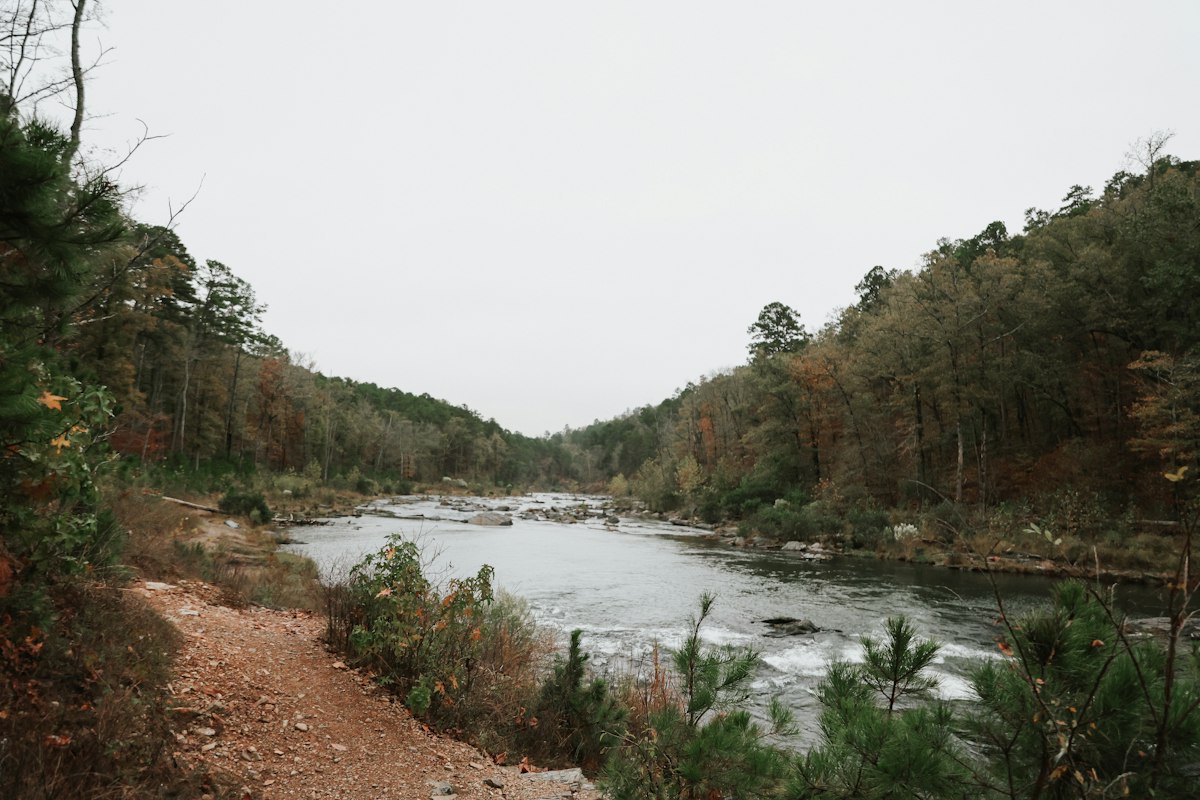
South Platte specifics: three bottoms, three reads
The South Platte gives you radically different bottom contours within an hour’s drive, and each one asks for a different version of this read.
Deckers — pockets and buckets
The water runs over Pikes Peak granite cobble and boulders, so the bottom is busy and broken. You’re reading boils for the rocks and slicks for the pockets and buckets behind and beside them, and the depth changes are short and sharp — a bucket might be six feet long. This is heavy-bead, short-drift water: get the flies down fast, tick one bucket, lift and reset. The contour changes so often that you’re adjusting almost every drift. Deckers is about an hour from me in Colorado Springs — US-24 west through Woodland Park, then north on CO-67 — which makes it good long-evening water, and the river that taught me all of this the hard way, one snagged Blowtorch at a time. Full directions and access in the Deckers guide. Every rock I cursed was also the reason a fish was sitting behind it.
Cheesman — shelves and glassy slots
Cheesman Canyon is shelf country. The granite forms ledges that step down into deep, glassy slots, and on a clear day you can read those slots by color — a dark ribbon through pale stone. The water is slow and clear and the fish are spooky and educated, so the read here is about finding the depth of that glassy slot and getting a long, clean drift down it without lining the fish. Longer tippet to reach the depth, careful wading on the granite (rubber soles and a staff — I never fish felt or studs), and patience to read the shelf before you commit. Cheesman is the one river where I actually slow down, mostly because the fish have a PhD and the hike out makes you pay for a wasted trip. Read first, cast second.
Dream Stream — gravel troughs
The Dream Stream is a meadow tailwater with a gravel and sand bottom, and the contour you’re reading there is the trough — the deeper gut carved through an otherwise even bottom, often marked by a slick or a darker line winding down the run. The fish hold in those troughs. The read is subtle because the meadow water doesn’t break up the way Deckers does; you’re looking for the faint slick and color change that gives away the deeper channel, then walking your flies right down it. The Dream humbles me regularly — I’d scan a flat meadow run, decide there was nothing to read, and walk straight past the trough that was stuffed with fish. The tell is faint on purpose. Trust the slick.
My take
I thought reading water and reading depth were the same skill for a long time. They aren’t. I’d find a textbook seam, drop my flies in, catch nothing, and blame the fly — when my flies were riding a foot over a trout glued to the floor of a bucket I never knew was there. What fixed it was reading the surface for the bottom — boils, slicks, water color — and moving weight and tippet run to run to follow that contour down. The fish were always there. My flies weren’t. On a tight line, depth control isn’t a detail; it’s most of the game.
How do I know how deep the water is if I can’t see the bottom on a tight line?
Read it off the surface and confirm it with the sighter. Boils and welling-up mark rocks and shelves; smooth slicks in textured water mark deeper buckets and troughs; darker water is deeper than lighter water. Picture the contour from those signs, set your weight and tippet for it, then watch the sighter — when your point fly ticks bottom you’ll feel an irregular stutter, and when you drop off a shelf into a bucket you’ll see the sighter sink as the flies fall into the new depth. That combination of surface-read plus sighter-feedback is how you fish a depth you can’t see.
Bottom line
Reading water tells you where the trout is. Reading the bottom tells you whether your flies will ever reach it. On a mono rig there’s no indicator doing the depth-keeping for you — you read the streambed off the surface, you picture where the slow bottom seam runs, you set weight to get down and tippet to hang at depth, and you adjust both as the contour rolls and drops underfoot. Then the sighter confirms the tick. Find the bucket behind the boil, the slot in the dark ribbon, the trough under the slick — get your flies into that window and keep them there — and the fish that ignored a perfect drift over their heads all morning start eating.
Next in The Tight Line → Part 3: Leading vs. Following Your Flies — you can read the slot now; leading and following are how you steer the flies down it.