
If you’ve pulled up a flow gauge this week and felt your stomach drop, you read it right. We came out of a weak winter — thin snowpack, not much up high to melt — and now, in the back half of June, a lot of my home water is running low. Not everywhere. But the rivers that lean hardest on snowmelt and reservoir releases are skinny, and a couple are downright bony.
I’ve spent the better part of two decades learning which South Platte sections fish well at which flows, and I’ll be honest with you: I had a Dream Stream trip penciled in this week that I quietly cancelled. Here’s the honest picture as of June 25 — where to point the truck (and why a lot of it points uphill this summer), where to give it a few weeks, the water temperature that should end your day no matter how good the bite is, and how to actually catch fish when the water gets thin.
What the gauges say right now
| River | Flow (June 25) | The call |
|---|---|---|
| Deckers (South Platte) | ~210 cfs | ✅ Go — fishing well |
| Cheesman Canyon | ~214 cfs | ✅ Go — healthy |
| Dream Stream | ~50 cfs | 🔻 Wait |
| Eleven Mile Canyon | ~60 cfs | 🔻 Wait |
| Arkansas at Pueblo | ~26 cfs | 🔻 Skip for now |
Live gauge readings the morning of June 25, 2026 (USGS + Colorado DWR). Flows move fast this time of year — check the current number before you drive.
Two of those should stop you cold. The Dream Stream at ~50 and Eleven Mile at ~60 are low enough to change how — and whether — you fish them. And the Arkansas at Pueblo at 26 cfs is not a typo. Two weeks ago it was pushing 450. They cut it hard, and I’ll get to what that means for the fish.
Why the rivers are low
Most of the water I fish is tailwater — it comes out of the bottom of a dam, so the flow is whatever the reservoir upstream decides to let go. In a fat snow year, those reservoirs fill, and the people running them can afford to send water downstream all summer long. This was not a fat snow year. The high country didn’t bank much, so the reservoirs feeding the Dream Stream (Spinney), Eleven Mile, and Pueblo down south are holding tight to what they’ve got. Less in the bank means less out the bottom. Simple as that.
That’s exactly why the Arkansas at Pueblo fell off a cliff — roughly 450 cfs down to 26 in about two weeks — the moment the early-summer release window closed. That’s not weather; that’s water management, a spreadsheet in an office somewhere deciding your weekend.
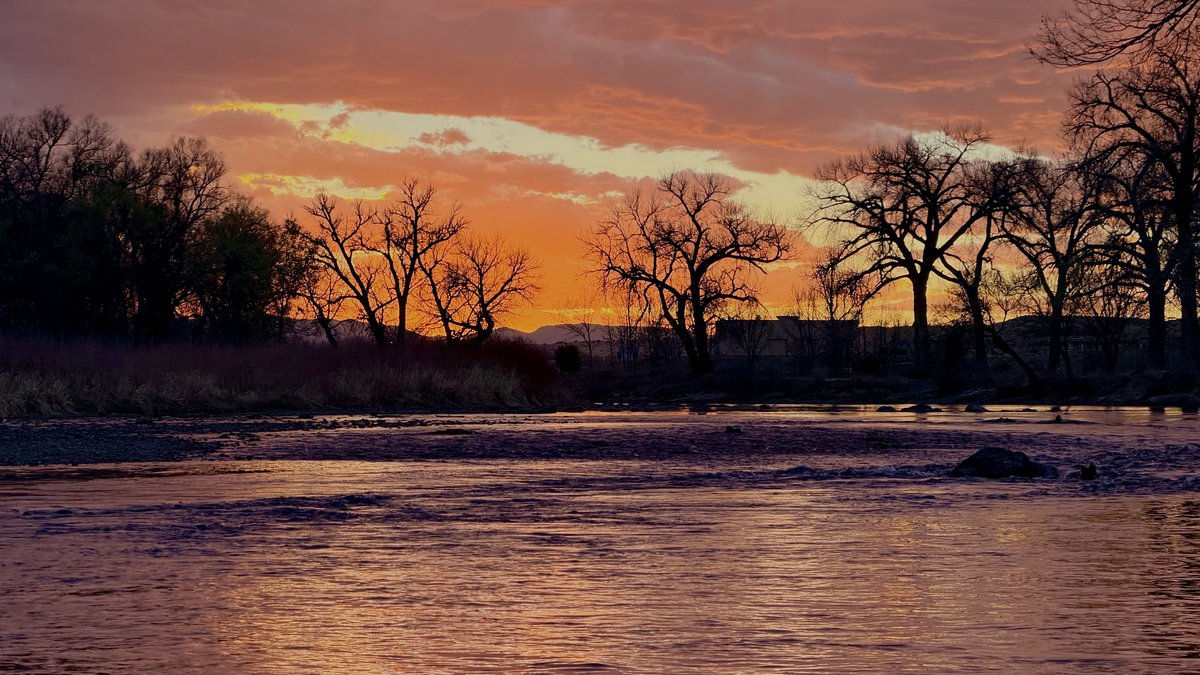
The exception is the upper South Platte below Cheesman Reservoir, which feeds Cheesman Canyon and Deckers. Cheesman still has water to give, so both of those are running right where you want them. Funny how it works: same drainage, same weak winter, two completely different stories depending on which dam you happen to be standing under.
How to read these flow numbers
What counts as a “good” flow, anyway? It depends entirely on the river — CFS (cubic feet per second) is just how much water is moving past the gauge, and a number that’s perfect on one river is a trickle on another. Here’s the rough window I look for on each:
- Deckers: 80–250 cfs (running ~210 — near the top, and great)
- Cheesman Canyon: 250–400 (at ~214 — a touch below the productive band, but fishable)
- Dream Stream: 100–250 (at ~50 — less than half the floor)
- Eleven Mile Canyon: 80–300 (at ~60 — under the bottom)
- Arkansas at Pueblo: 150–800 (at ~26 — a fraction of fishable)
Below the floor, the river goes skinny, slow, and warm, and the fish get crowded and spooky. Above the ceiling, it pushes off-color and hard to wade. The sweet spot in the middle is where everything’s easier. I keep the live number for every river I fish on one page — our live flows — and I glance at it the night before, not from the parking lot with the rod already strung.
Where to fish: Deckers and Cheesman
This is the easy part, so let’s start with the good news.
Deckers is the call, and it isn’t close. At ~210 cfs it’s got real volume — fish are spread across the runs instead of stacked into the three deep slots everybody knows, the wading’s forgiving, and you’re not standing in bathtub-warm water by early afternoon. There’s enough room to fish a dry-dropper, swing a soft hackle, or run a tight-line rig through the pocket water, and right now all of it works. It’s my first stop this week, full stop. (New to the water there? Here’s how I read Deckers — pocket water versus pool tailouts.)
Cheesman Canyon is right behind it at ~214. That’s a touch below the canyon’s ideal, but it fishes beautifully there — it’s still well up on the dead-low winter flows, so the fish are a notch less neurotic than they get then, when a Cheesman rainbow will inspect your #24 for what feels like a full minute before politely declining. It’s a hike in over Pikes Peak granite, it’s about as technical as Colorado dry-fly fishing gets, and right now it’s worth every step. Wade careful on that rock, though — it’s slick, and I fish it in rubber soles with a wading staff, not felt.
The summer move: head up to the blue lines
If the tailwater picture has you discouraged, the high-country blue lines are where I’d point you next — they’re my favorite water on earth, and when the lowland rivers go low and warm, they’re usually the best card left to play. These are the small, often-unnamed creeks tucked up in the timber and above it — the squiggly blue threads on the map nobody bothers to label. And I’ll be straight with you, because the same weak winter that gutted the tailwaters reaches up here too: there wasn’t much snow to melt, the runoff petered out early, and a lot of these creeks are already running on bare-bones baseflow. What still works in their favor isn’t this year’s snowpack — it’s elevation and shade. A creek tucked under the timber at 9,000 or 10,000 feet simply stays cooler than a tailwater baking at 6,000, and the cold spring seeps that feed them run year-round. So even thin, they’re usually your best shot at cold water and willing fish when the valley’s cooking — and the wild trout up there are eager, unpressured, and nowhere near as fussy as a Cheesman rainbow.
You give up size — a blue-line fish is usually a jeweled little brookie or a wild ‘bow, not a trophy — but you gain cold water, solitude, and some of the prettiest country in Colorado. In a summer like this, that’s a trade I’ll take most days. Bring a short rod, a box of attractor dries, and your legs; these fish reward a clean drift and punish a heavy foot. And go in gentle, because they’re stressed this year too: tread light, fish the deeper plunge pools and undercut banks, keep a thermometer on you even up high, and don’t camp on one little pod of fish — a thin creek can’t take much pressure.
Where do you find them? Look high — the headwaters and feeder creeks above the reservoirs, the stuff that takes a hike and a willingness to get a little lost. I keep my own favorites to myself (every blue-line angler does), but if you’re just starting to chase them, here’s how I go about finding blue lines in Colorado.
Where to wait: the Dream Stream, Eleven Mile, and the Ark at Pueblo
Now the part that hurts.
I love the Dream Stream. It’s one of my favorite stretches of trout water in the state. I’m not fishing it right now, and you probably shouldn’t either.
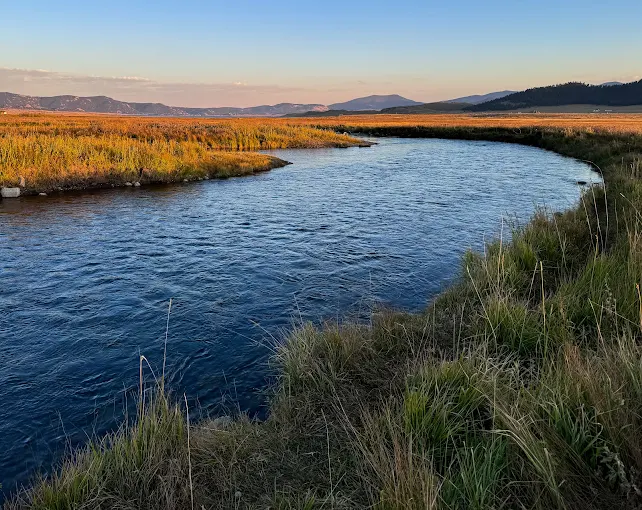
At ~50 cfs it’s a different animal — skinny, slow, and wide open to the South Park sun with no shade for miles. The fish are crammed into whatever depth they can find, they can see everything coming, and that shallow water heats up fast once the sun clears the ridge. Eleven Mile Canyon (~60 cfs) tells the same story, and the Arkansas at Pueblo (~26) is worse — that’s about as low as that tailwater gets in the heat of summer, and I’d leave it alone entirely until they bump the release.
None of these are ruined. They’re just waiting on water. Give them a couple weeks, keep an eye on the gauge for a release bump or a good monsoon soak, and they’ll be worth the drive again.
Should you fish the Dream Stream right now?
Short answer: no. At ~50 cfs it’s too skinny and too sun-exposed to fish responsibly through a summer afternoon — the trout are stacked up, spooky, and easily stressed, and a fish you fight hard in warm, shallow water often doesn’t make it even if it swims off looking fine. Give it two weeks and watch for a release bump. If you want moving water this week, point the truck at Deckers.
The number that should end your day: water temperature
Here’s the thing nobody likes to hear in July: the flow tells you where the fish are; the water temperature tells you whether you should be bothering them at all.
Trout breathe dissolved oxygen, and warm water holds less of it. The hotter it gets, the harder a trout has to work just to breathe — and a fish that’s already oxygen-starved, then hooked, fought, and handled, can swim away looking perfectly fine and die twenty minutes later in a back eddy where you’ll never see it. Low water makes it worse, because thin water warms faster and offers fewer cold pockets for a fish to recover in.
So carry a stream thermometer — they run about ten bucks and mine lives in my pack year-round — and actually use it. Here’s the scale I fish by:
- Below 60°F: prime. Trout are active, healthy, and bounce right back. Fish hard.
- 60–65°F: still good, but the clock’s running. Fish the morning, land them quick, keep them wet.
- Around 65°F: this is my line. When the water hits 65, I’m done for the day — not because the fish stop biting, but because that’s where catch-and-release quietly starts killing fish. Plenty of biologists and Colorado guides draw it right here, at 65 to 67 degrees.
- Upper 60s and warmer: don’t. A 68-degree afternoon on a low river is no place to be hooking trout, no matter how willing they are.
And here’s the part that actually changes how you fish: water temperature swings hard through the day. It’s coldest right at dawn and peaks in the mid-to-late afternoon — often a good 8 to 12 degrees warmer than it was at first light. That’s the whole argument for fishing early right now. The first couple hours after sunrise are cool, the fish are least-pressured, and you’re off the water before it gets dangerous. Check the temp when you arrive, check it again mid-morning, and when it crosses your line, reel up and go get a coffee. The river will be there tomorrow, and so will the fish — if we let them be.
My take
I’ll be honest about my plan this year: I’m going to fish less than I’d like to. Not because I want to — because of summers like this one. When the water’s this low and this warm, a trout fought hard in the afternoon heat often doesn’t make it, and I’m not interested in running up a quiet body count for a few more grabs. So I’ll fish the cold early hours, lean on the high-country blue lines where the water stays honest, and sit out the worst of the afternoons. Sometimes respecting the river means leaving the rod in the truck — and I’ve made my peace with that.
How to fish low, clear water
When the water drops, your margin for error drops with it. The fish that survive low summer flows do it by getting cautious, and you have to match that. This is when euro-nymphing the South Platte really earns its keep — but whatever rig you run, a handful of things matter more than usual:
- Lengthen and lighten. Go to a longer leader — 10 to 12 feet — and drop a tippet size. In skinny, clear water the fish get a long, unhurried look at everything; give them less to look at. I’ll fish 6X on the South Platte at these flows without blinking.
- Size down. Low summer flows are midge-and-small-mayfly water. A #18 to #22 — a Black Beauty, an RS2, a small pheasant tail — out-fishes anything chunky right now. Match the bug, then go one size smaller than you think you need.
- Fish the depth and the edges. What little deeper water there is — the heads of pools, shaded cut banks, the drop-off below a riffle — is where every fish in the run is stacked. Hit that water and skip the bony frog water in between.
- Move slow and stay low. At these flows your shadow and your footfalls are the enemy. Crouch, fish upstream, and wade like you’re sneaking up on them, because you are. I’ve blown more low-water pods by clomping into position than by any fly choice — ask me how I know.
- Go early, then go home. Best light, coolest water, least-pressured fish. The first two hours are worth the next six, and they keep you off the river when it warms.
Handling fish when the water’s warm
If you’re going to fish low, warm-ish water at all, land them fast and treat them gently — your tackle and your hands are the difference between a fish that swims off and one that doesn’t.
- Land them quick. This is the one time I’ll go slightly heavier on tippet than finesse demands, just to end the fight before the fish is wrecked.
- Keep ‘em wet. Unhook the fish in the net, in the water. Want a photo? Get the camera ready first, lift for two seconds, and put it back.
- Skip the hero shot. On a 65-degree afternoon, the long grip-and-grin can be a death sentence. Admire it in the net and let it go.
- Pinch your barbs. Barbless comes out clean and fast, which is the entire point.
- Revive it. Hold it upright, facing into the current, until it kicks off on its own. If it won’t go, you held it too long — remember that for the next one.
When will the rivers come back?
The honest answer: watch two things. Reservoir releases can change a tailwater overnight — when the folks managing Spinney or Pueblo decide to send more water down, the Dream Stream or the Ark can go from skip-it to prime in a single day. And the monsoon — those July and August afternoon storms — can bump flows and, more importantly, knock the water temperature back down. A wet, cool stretch in mid-summer is exactly what these low rivers need. So don’t write them off for the season. Bookmark the gauge, watch for a jump, and be ready to roll when the water comes back.
The one rule
Check the gauge before you commit. Flows are moving right now, and a single release — up or down — can remake a river overnight. I’ll say it one more time, because it’s the whole game this summer: fish where there’s water, fish early, carry a thermometer, and take care of the ones stuck in the skinny stuff.
Next: keep an eye on the live flows for every river I fish, brush up on reading water on the South Platte, and when the water’s thin, euro-nymphing is the rig that’ll save your day.