
In this guide
Picture a March morning at Deckers when the fish seem to have lockjaw. Cold hands, perfect-looking run, nothing. You cycle through half the fly box and start taking it personally, the way you do when a river makes you feel like the only person on it without a clue. Then the angler downstream pinches on one more shot and starts hooking up in the same seam you just worked. He isn’t fishing a better bug. He’s fishing eighteen inches lower.
That’s the usual story. If you’re nymphing a good run and not catching, the odds are you’re fishing over the fish, not past them. Trout holding in current sit low — in the bottom third of the water column, where the flow is slowest and the food rides. That bottom slice is the strike zone, and getting your flies into it and keeping them there is most of the game. Pattern matters less than people think. Depth matters more. Plenty of anglers change flies for an hour when the only thing that needed changing was about three feet of vertical.
Here’s how to get down on the South Platte and the Arkansas without overthinking it.
How Deep Should My Nymphs Be?
Deep enough to tick the bottom. Trout in current hold in the bottom third of the water column, so your flies should ride just above the rocks and occasionally bump them. If you never touch bottom, you’re drifting too high; if you drag constantly, you’re too heavy.
A trout won’t usually climb three feet through fast water to chase a #20 nymph — the calories don’t pay. It tucks into the cushion right off the bottom and lets the current deliver, like a guy who’s found the one good booth at the diner and isn’t giving it up. So your flies need to be ticking along just above the rocks. If you’re not occasionally bumping bottom and losing the odd fly, you’re probably drifting too high. A little contact with the streambed is the cost of fishing the zone, and it’s a cost worth paying.
Losing flies feels personal, and the fish do not care about your feelings. The rig that never snags is also the rig that never catches — they’re closer to the same thing than most of us want to admit.
Two Ways to Get Down
You weight a rig two ways, and often both at once:
- Weighted flies. A tungsten bead-head jig carries its weight in the fly itself. Tungsten is dense, so a small bead sinks fast without bulking up the pattern. Slim, lacquered Perdigons are about the fastest-sinking flies you can tie — when you need to punch through a deep, pushy slot, that’s the anchor.
- Split shot. Pinch-on weight above the flies, on the tippet. Cheap, infinitely adjustable, and the fastest way to add or subtract depth without re-tying. The downside is it casts like a wet sock and hinges your rig, so use the least that gets you down.
Why tungsten instead of the old brass beads? Density. Tungsten is roughly twice as heavy as brass for the same size, so you get the same sink out of a smaller bead — the weight goes down without the fly ballooning into something a picky tailwater trout reads as wrong. That’s the trick behind the modern euro nymph: mass where you want it, slim everywhere else. When one bead won’t do it and you don’t want to fatten the head, stack two small beads back to back the way Charlie Craven does on his Two Bit Hooker — more sink, same skinny profile. Non-toxic tungsten shot on the tippet is worth the extra money, too; lead’s cheaper, but a river this heavily fished doesn’t need anyone salting the gravel with it.
On a tight-line/euro rig, lean almost entirely on fly weight — heavier tungsten for the deep fast slot, lighter beads for the skinny glassy tailout — because there’s no fly line on the water and the fly’s own weight does the work. Think of it as picking the right ballast before you leave the bank instead of bolting lead onto the leader as a panic afterthought. Under an indicator in deep or pushy water, add shot to a lighter fly rather than swap patterns.

Depth Is Weight and Angle
Here’s the part that separates anglers who catch from anglers who snag and curse: depth isn’t just how much weight you hang on. It’s weight plus drift angle.
On a euro rig, the sighter’s angle tells you everything. Keep it steeper and tighter to ride deeper; flatten it out to ride higher. Read the sag — too vertical and locked up, you’re dragging the flies along the bottom and slowing them unnaturally; too much slack belly, you’ve lost contact and you won’t feel the take. The whole skill is holding the flies at the fish’s depth, moving at the fish’s speed.
There’s a third lever most people ignore: tippet diameter. Thinner tippet slices the current faster than a heavier bead does — Devin Olsen and George Daniel both preach fishing the thinnest tippet you can get away with for exactly that reason, because diameter buys you sink rate without hanging one more thing off the leader to fight on the cast. Drop from 4X to 5X and the same fly rides deeper on the same drift. The other quiet killer is tension: put a belly in the line and pull downstream too early and you arrest the sink before the fly’s had a chance to fall. Build in a little manageable slack and let it drop like a stone in still air — the instant you come tight, it stops going down, which is fine at the fish’s depth and a waste two feet above it.
The delivery matters too. A tuck cast — stopping the rod high so the heavy fly kicks down and under the leader — drives the nymph to depth fast at the head of the seam, so it’s already in the zone by the time it reaches the holding water. A lazy lob lands everything flat and your flies don’t sink until the drift is half over.
It takes most anglers an embarrassing number of trips to admit their “drifts” are really just flies free-falling past the fish after the good water is already behind them. Get the tuck cast working and a lot of “dead” water turns out to be holding water.
Match the Weight to the Slot
The most common mistake is one rig fished through every kind of water — the angler who rigs up in the parking lot and then treats that setup like a tattoo. A run isn’t one depth. Read it and re-weight:
| Water | Depth/speed | How to weight it |
|---|---|---|
| Deep, fast bucket | 6–8 ft, pushy | Heavy tungsten anchor (3.3–3.8 mm) or fly + shot; tuck cast |
| Standard run/riffle | 3–5 ft, walking pace | Single 2.8–3.3 mm jig on point, lighter dropper |
| Glassy tailout / flat | 2–3 ft, slow | Light bead (2.0–2.5 mm), no shot; let it sink on a long drift |
| Pocket behind a rock | shallow, broken | Just enough to tick bottom in two feet of travel |
Adjust as you move. Add a shot when you step into the deep slot; pull it when you drop onto the flat. Five seconds of re-rigging is cheaper than an hour of drifting over fish.
My take
Put the weight in the fly, not on the leader. Pinch on a shot when an indicator rig meets a genuinely deep hole, but a slim tungsten jig casts cleaner, stays connected, and gets to the bottom without hinging the rig. The other half is attitude: budget flies for the rocks. The drifts that tick bottom are the drifts that get eaten, so I’d rather leave a few Perdigons in the gravel every day than fish all morning two feet over the fish.
Jig Hooks Ride Hook-Up
One quiet win: tungsten beads on 60°/90° jig hooks ride hook-point-up. That means fewer snags on the bottom — exactly where you’re trying to fish — and a hook point that comes up into the jaw. It’s the rare bit of fishing physics that’s actually on your side for once; usually the river is the one with the angles. Most of my tailwater nymphs (Perdigons, Frenchies, Walt’s Worm, and the Blowtorch — orange tag for stained water, green for clear) are tied jig-style for that reason. You can fish the zone harder when you’re not re-tying with cold fingers after every drift.
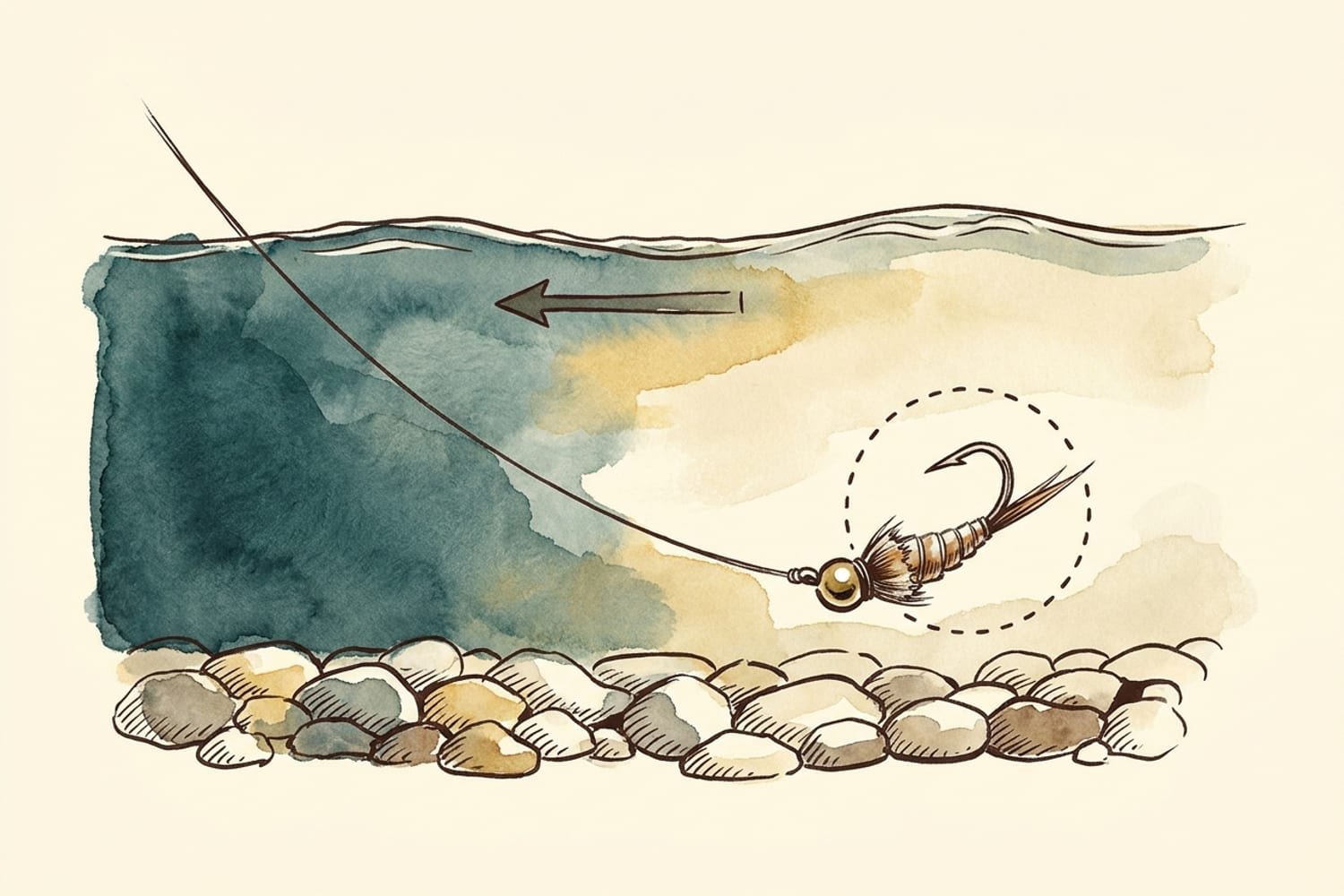
Read the Flow Before You Tie On
Weight is a flow conversation, and the river starts talking before you’ve laced a boot. On the South Platte at Deckers, anglers generally call ~150–400 CFS the productive window, with roughly 100–250 the wading sweet spot. Below ~100 it goes ultra-technical — light flies, long drifts, fish that inspect everything like a customs agent who’s had a long day. Push past ~400 and you need real weight just to reach bottom, and wading gets sketchy. Check the gauge before you drive up (the Deckers-reach gauge is USGS 06701900, officially sited at Trumbull just downstream), and let the number set your starting weight instead of guessing on the bank.
Frequently Asked Questions
Q: How much split shot should I start with? Start light and add. Make a drift; if you never touch bottom, add one shot (or size up the bead) and try again. The goal is occasional, gentle contact with the streambed through the heart of the drift. Constant dragging means too much; never touching means too little.
Q: Where do I put the split shot on the leader? Above the flies, on the tippet, far enough up that the flies still drift naturally below it — a common setup is shot 6–10 inches above the first fly, or above the tippet ring on a dropper rig. Keep it off the fly itself so the pattern still moves freely.
Q: Tungsten flies or split shot — which is better? Tungsten flies cast and drift cleaner and snag less on jig hooks, which is why euro anglers build depth into the fly. Split shot is more adjustable on the fly and better for adding depth under an indicator in deep water. Fish weighted flies first and treat shot as the fine-tune.
Q: Why do I keep snagging bottom and losing flies? Some loss is the price of fishing the zone — make peace with it the way you make peace with paying for parking. But constant snagging usually means too much weight for the drift angle, or you’re high-sticking too late. Lighten up a hair, lead the rig a touch faster, and lift at the tail of the drift instead of letting it plow.
Dial depth before you dial pattern. Get a slim tungsten jig ticking the bottom at current speed through one clean lane, and you’ll out-fish the guy three weights heavier with the “perfect” bug riding two feet over the trout’s heads.
If you tight-line, the other half of depth control is reading that sighter — that’s a whole skill of its own, and I broke it down in reading the sighter on the South Platte. For the full rig from butt section to point fly, start with the South Platte nymph rigging guide.