
I lose nippers. Not once in a while — chronically, the way other people lose pens and reading glasses. I’ve fed so many to the river that I stopped keeping count somewhere around number one hundred, and I only get away with saying “a hundred” because it’s a joke; the real figure would be embarrassing. A nipper is the single easiest thing in a kit to lose — small, always in your hand, set down and picked up a hundred times a day — and mine kept vanishing the moment I looked away.
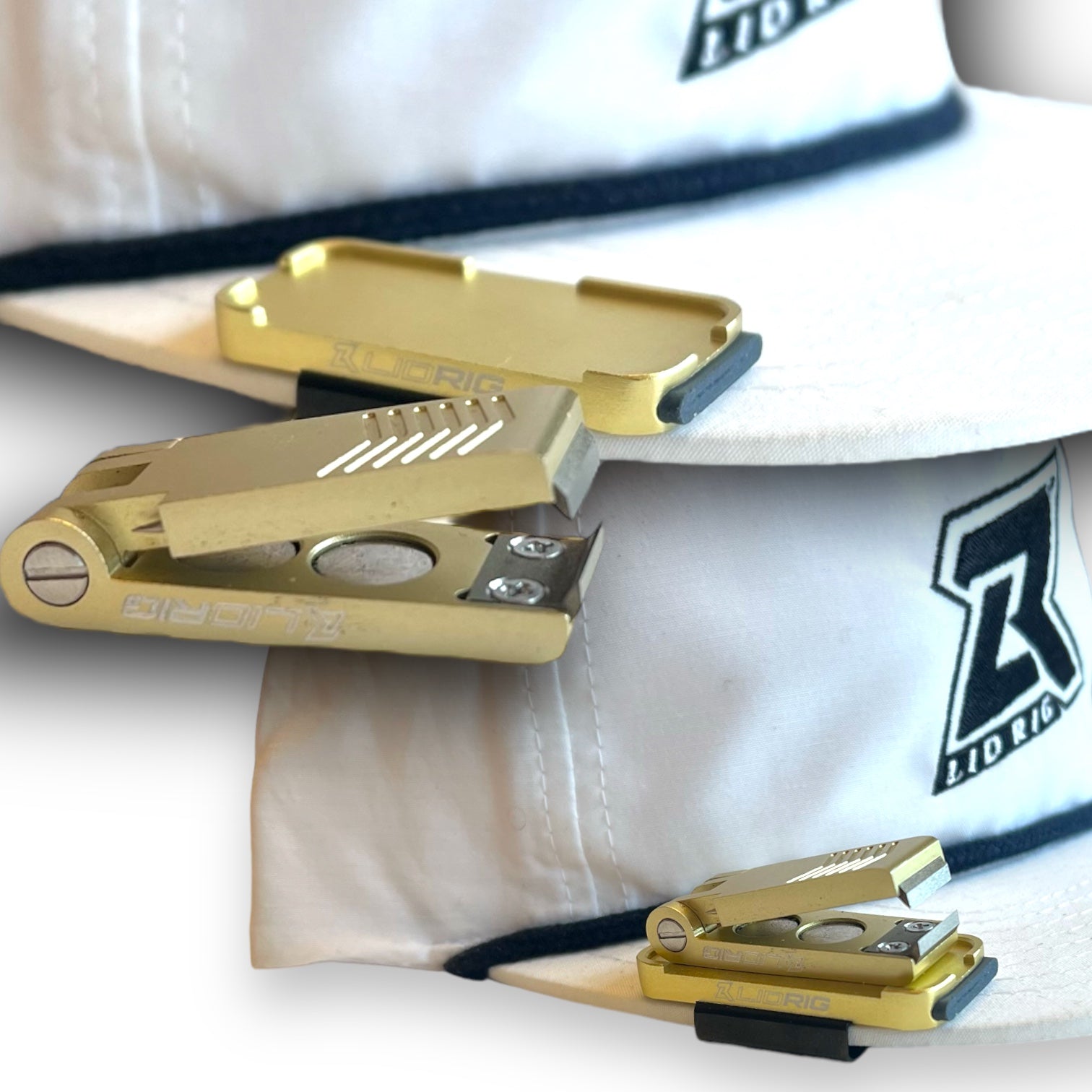
So I’d been running the Stash Tray — a little magnetic dock that clips to a hat brim — for a while, and after losing yet another nipper I finally did the obvious thing and dropped a Lid Rig 3.0 into the empty spot. Full disclosure: Lid Rig sent both the Stash Tray and the 3.0 over to try. What follows is my honest read all the same, because a review that won’t tell you when a thing is overpriced or gimmicky isn’t worth your time.
Here’s where I landed: the reflex is to file a $60 nipper under jewelry, sight unseen. That reflex is wrong. It solves a small, constant, personal problem so cleanly that the nipper simply stays where I put it — which, for a man with my record, feels a little like being cured of something. I didn’t expect to care this much about a nipper. I do.
Why put your nippers on your hat brim?
Because that’s the one spot your hand already goes without your brain getting involved. Docked an inch below your eye line on the Stash Tray, the nipper is right there for every fly change — no reaching down, no digging through a pack, nothing swinging off your chest. On technical water where you re-rig all day, that saved motion is the whole point, and it’s the thing the Lid Rig gets genuinely, surprisingly right.
What the Lid Rig actually is
Two pieces that make one system. The Lid Rig 3.0 ($59.95) is a machined-aluminum nipper — a very good one. The Stash Tray ($37.95) is a small magnetic dock that clips onto the brim of your hat, and the nipper snaps onto the dock with rare-earth magnets. Put them together and your nippers live on the front of your cap, held on by magnets instead of a retractor waiting to fling them at your face.
It sounds like a gimmick right up until the fourth fly change of the morning, when the tool is simply there and you never broke stride to find it. On a tailwater you change flies about as often as other people check their phones, and the couple of seconds saved on each swap add up to something real by the end of a day on Deckers.
The nipper: built like it owes somebody money
Most nippers cut fine for a season and then the sprung jaws go dull or grit up and you’re back to gnawing 6X with your incisors like it’s 1974. The Lid Rig is built to sidestep that on two fronts.
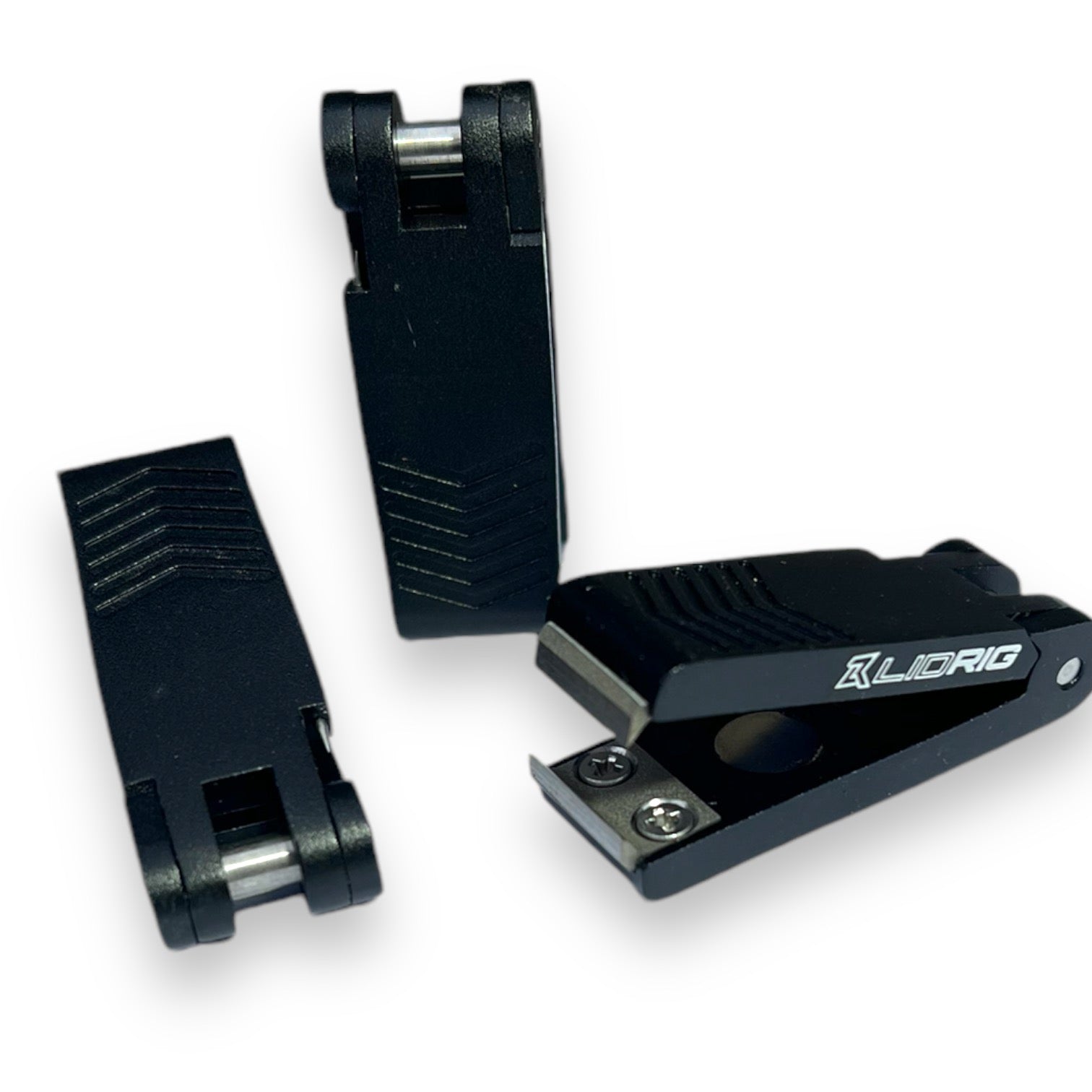
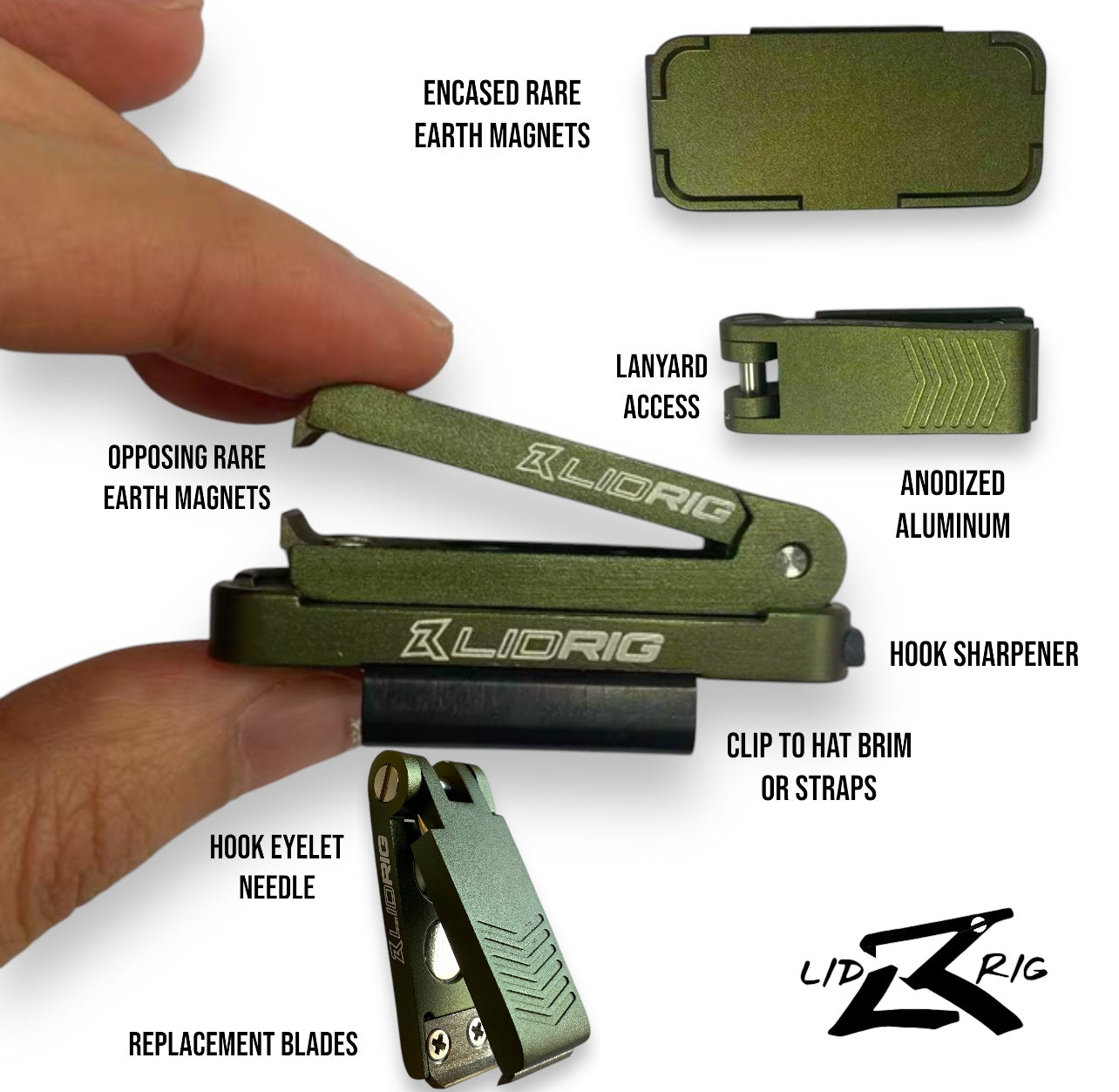
The body is Mil-Spec Type III anodized 7075 aluminum — the hard aerospace alloy, not the pot-metal a cheap tool hides under a coat of paint — with 6061 inserts, and the jaws are replaceable 440C stainless steel heat-treated to 58 Rockwell. When they finally dull, you swap the blades instead of the whole tool. But the detail worth an actual raised eyebrow is the mechanism: there’s no hinge and no spring. It opens and closes on two sets of opposing rare-earth magnets. No pivot to grit up, nothing to corrode, no tired little coil to go soft on you down the road. It reads like showing off right until you remember that the hinge is the exact part that fails first on everything else.
It cuts from 8X tippet up to braid on dual cutting surfaces, and the thing that matters there is a clean, square, non-fray face on fine fluoro — the difference between threading a #24 on the first try and cursing at it in flat light. Tucked into the head is a hook-eye needle for clearing head cement out of a jammed eye, so the nipper covers two of the three fiddly re-rig jobs — trim and clear — on its own; the third, touching up a dull point, lives on the Stash Tray. It comes in black, gold, blue, or olive, and Lid Rig will laser-etch a logo on it if you’re the monogramming type.
The Stash Tray: the part that surprises people
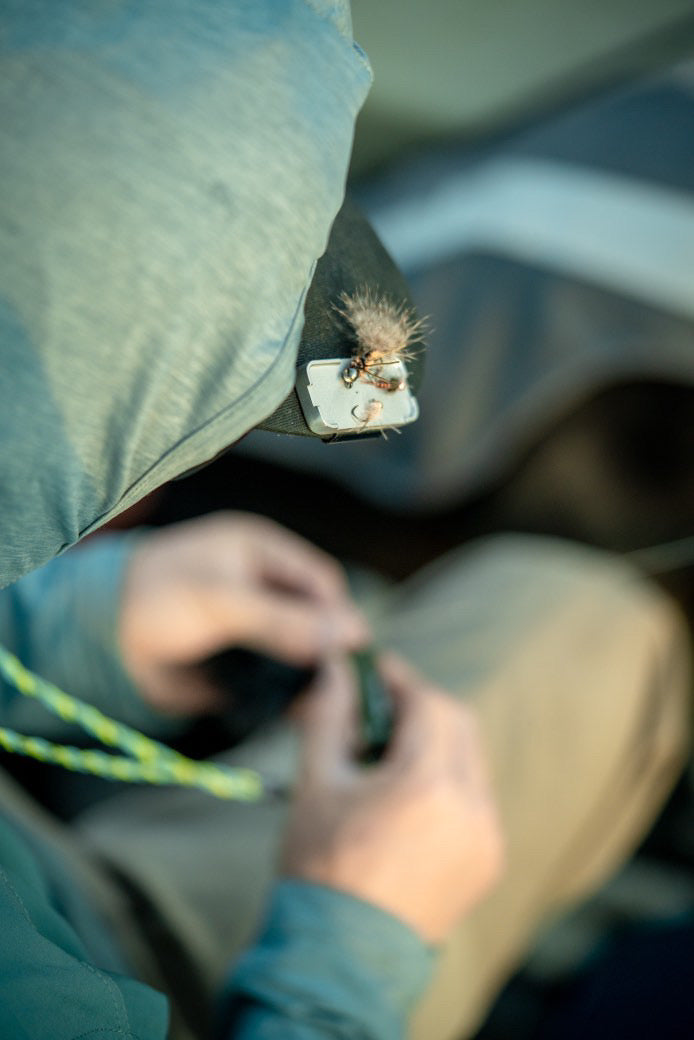
The nipper is the headline; the Stash Tray is the sleeper. It’s a 2-by-1-inch slab of anodized aluminum with rare-earth magnets inside and a built-in hook sharpener, and it clips onto your hat brim — or a vest, a chest pack, a belt, wherever a magnet can grab. The nipper docks on top of it. But the tray does a second job that’s easy to underrate: it holds your next flies where you can see them. Not a box — realistically a couple of small streamers or a handful of nymphs and dries — but that’s exactly the number you want staged when you’re working a run and burning through the pattern that should be producing.
The move is to keep the flies you’re about to try sitting on the tray, points forward, and re-rig off your own brim instead of unzipping a pack and pawing through a box with cold fingers. It turns a fly change from a full stop into something you do while you’re still reading the water, which on a technical day is most of the game.
How it fishes
The test for any tool isn’t the spec sheet, it’s whether you forget it exists until the moment you need it and then it’s exactly where your hand expects. Good gear disappears; the Lid Rig does — and then it quietly takes the friction out of the part of fishing everyone rushes.
Two things make it work on the water:
- No-look access. On a technical day — the kind the South Platte specializes in, cycling through #20 to #24 midges, adding a dropper, shortening the sighter — the trim-and-swap loop never sends your hand reaching down. It all happens in the eight inches in front of your face.
- A hold you can trust. You’re betting a $60 tool on a magnet over moving water, so the grip has to earn it. It has, for me — the nipper has only ever come off the tray when I pulled it, never on a hard wade, a hike, or a snag. That’s the opposing rare-earth magnets doing their job.
Is it life-changing? No — it’s a nipper. But one docked to your hat by a magnet can’t go swimming the way one on a retractor can, and deleting that failure mode is worth more than the spec sheet lets on. It’s the pebble you finally shook out of your boot: the relief is out of all proportion to the pebble. That’s the Lid Rig — and it’s the rare small thing I’d tell a friend to just buy.
The trade-off: pros and cons
Pros
- Built to outlive the trend. 7075 aluminum, 440C replaceable jaws, and a magnet mechanism with no hinge or spring — the two parts that kill every other nipper simply aren’t there.
- Cuts clean down to 8X. Square, non-fray faces on fine fluoro, which is exactly where cheap nippers quietly cost you.
- It’s a system, not just a cutter. The nipper trims and clears a jammed eye; the Stash Tray adds a hook sharpener, stages your next flies, and holds the nipper on your hat. Three jobs, one spot, no lanyard swinging into your sternum.
- No-look access. Once it’s on your brim, re-rigging stops involving a reach-down — and it delivers.
Cons
- It’s a two-piece purchase. The nipper is $59.95 and the tray it docks on is another $37.95 — call it ~$98 for the full system. (The nipper rides a standard lanyard if you skip the tray, but then you’ve bought a very nice nipper and left the best part on the shelf.)
- The tray holds a few flies, not a box. A couple of small streamers or a handful of nymphs and dries — a staging spot, not a fly box. Don’t leave the box home.
- It’s premium-priced on purpose. If your nippers are a $4 impulse buy at the shop counter and you’re happy, this isn’t trying to convert you. It’s for people who re-rig constantly and want the last set they’ll buy.
Price and who it’s for
Ninety-eight dollars for a nipper and a magnetic tray is real money, and there’s no point pretending otherwise. The fair frame is what it replaces: a retractor, a separate hook file, a hook-eye pick, and the slow tax of replacing cheap nippers you keep losing. If you fish a technical tailwater, run euro or tight-line rigs, or you’re a dry-fly angler cycling patterns all afternoon, it earns its keep in saved fumbling and saved gear. If you fish one fly all day and cut with your teeth on principle, keep your four dollars — I mean that with respect.
For where it sits in a real kit, it slots in next to the small stuff that actually gets reached for, the sort of thing in what I bring to the river. It’s not going to bump a rod out of my quiver, but among accessories it’s the rare one that earns the spot rather than riding along in a pack pocket, forgotten.
My take
If you re-rig constantly — tailwater midges, euro nymphing, changing dries — the Lid Rig 3.0 and Stash Tray are worth the ~$98 — a verdict I don’t hand many sub-$100 gadgets. Buy them together; the nipper alone on a lanyard is good, but the hat-mounted system is the part that actually changes the day. It’s overbuilt where it counts, cuts 8X clean, and turns a small, constant annoyance into a non-issue. The only real caveats are the two-piece price and the tray’s modest fly capacity. Everything else it nails — and the fact that I still have this one, me of all people, is the whole review.
Frequently asked questions
What is the Lid Rig 3.0? It’s a premium machined-aluminum fly-fishing nipper that opens and closes on rare-earth magnets instead of a spring or hinge. It cuts tippet and line from 8X up to braid, has a built-in hook-eye needle for clearing jammed eyes, and attaches magnetically to the Stash Tray so it can ride on your hat brim. It’s $59.95.
Do I need the Stash Tray to use the nipper? No — the nipper works on a standard lanyard like any other. But the Stash Tray ($37.95) is what makes it a hat-mounted system — it adds a hook sharpener and stages a few of your next flies. If you’re buying in, buy both; the tray is the part that changes how you fish.
How small a tippet will it cut cleanly? Down to 8X. On 7X and 8X fluorocarbon it leaves a clean, square face rather than a frayed one, which matters when you’re threading tiny hook eyes in poor light.
Will the magnet hold the nipper while I’m hiking or wading? For me, yes — it’s never let go on its own. The nipper only comes off when I deliberately pull it; wading, hiking, and snags haven’t shaken one loose. The hold is opposing rare-earth magnets, not a clip or a spring.
How many flies fit on the Stash Tray? Realistically a couple of small streamers or a handful of nymphs and dries — enough to stage the patterns you’re about to try, not a replacement for a fly box.
Is a $60 nipper actually worth it? For casual, one-fly-a-day fishing, probably not. For anglers who re-rig constantly on technical water, the durable build, replaceable jaws, and no-look hat access make it pay off in saved time and saved gear over a cheap pair you replace every season.
Next: the rest of the small stuff that earns its place on the water — see everything I actually carry.