
Most of my season happens on tailwaters. Deckers, the Dream Stream, the Arkansas down at Pueblo — big, famous, technical water with big, famous, educated fish. I love it. It’s where I learned to fish, and it’s where I’ll always come back. There’s a reason those names are on every Colorado bucket list.
But lately I’ve been driving past them. Past the parking lots that fill by seven, past the runs with three anglers already standing in them doing that polite little nod that means this water’s taken, friend, up the dirt roads that turn into worse dirt roads, looking for the thin blue lines on the map. My truck has started to suspect something. This post is me working out what.
A blue line, in one breath
A blue line is a small, high, off-the-map creek you find by reading a topo instead of a fishing report — full of wild, unpressured trout that eat hard because nothing’s ever educated them. You trade size (a 10-inch brookie is a good one) for solitude, willing fish, and gear that fits in a sling: a short 7-to-7½-foot 3-weight, one fly box, no indicator. The finding is half the point, which is why you won’t get GPS pins here — and shouldn’t ask anyone else for them either.
What a blue line actually is
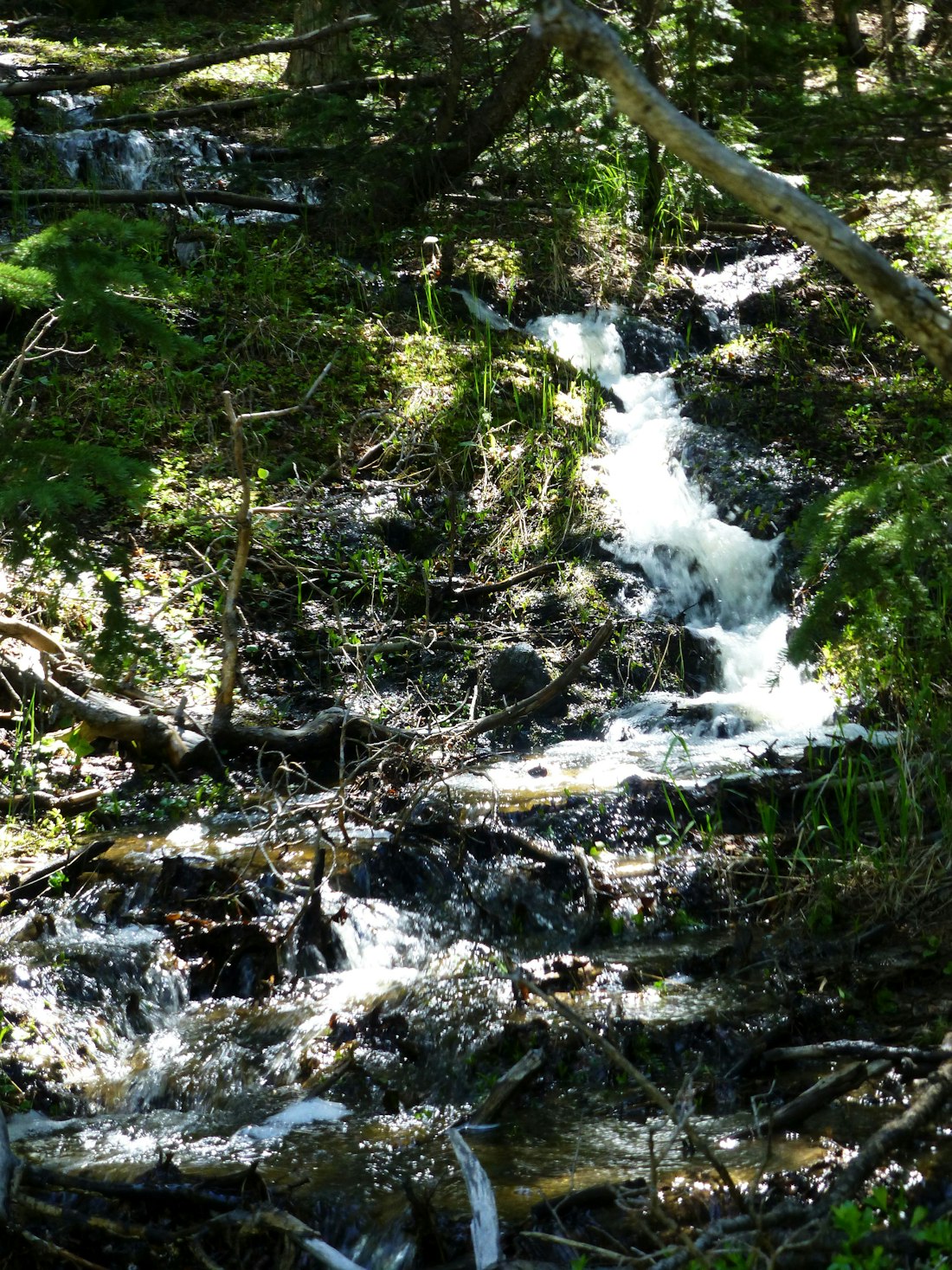
Pull up a topographic map of the Colorado high country. The rivers you know are the thick blue lines, the ones with names and gauges and Instagram geotags. But branching off them, climbing up into the timber, are hundreds of thinner blue lines — creeks. Most are unnamed. Most you’ve never heard of. A lot of them hold trout, and a surprising number hold trout that have never had a reason to be suspicious of anything.
That’s a blue line. A small stream, usually high, usually off the radar, that you find by reading a map instead of reading a fishing report. Some are barely a rod-length wide. Some you can step across without getting your boots wet. And the good ones are full of fish that have, quite literally, never seen a fly — which does something to a person who’s spent years getting refused by trout with PhDs.
How I actually got here
I’d like to say I came to blue lines through some noble pursuit of wild trout. The honest version is that I got a little burned out, and didn’t notice until I did.
Somewhere in the last few seasons, the tailwater game started feeling like work. Not in a bad way, exactly — I still respect it more than any other kind of trout fishing — but there’s a point in a season where the alarm goes off at 4:45, you do the math on the drive and the parking and the guy who’s definitely already in your run, and the whole thing reads more like a commute than a release. I’d be standing in the Dream Stream at first light fussing over whether my 7X had a wind knot, and some quiet part of my brain would ask, with genuine curiosity, are you having fun, or are you grinding a high score?
The first blue line I fished on purpose, I caught a dumb little brook trout on the third cast on a fly I didn’t even fuss over, laughed out loud alone in the woods like a crazy person, and realized I hadn’t done that — laughed, mid-fish — in a while. That’s the whole origin story. I went chasing the feeling, not the fish.
What the tailwater can’t give you
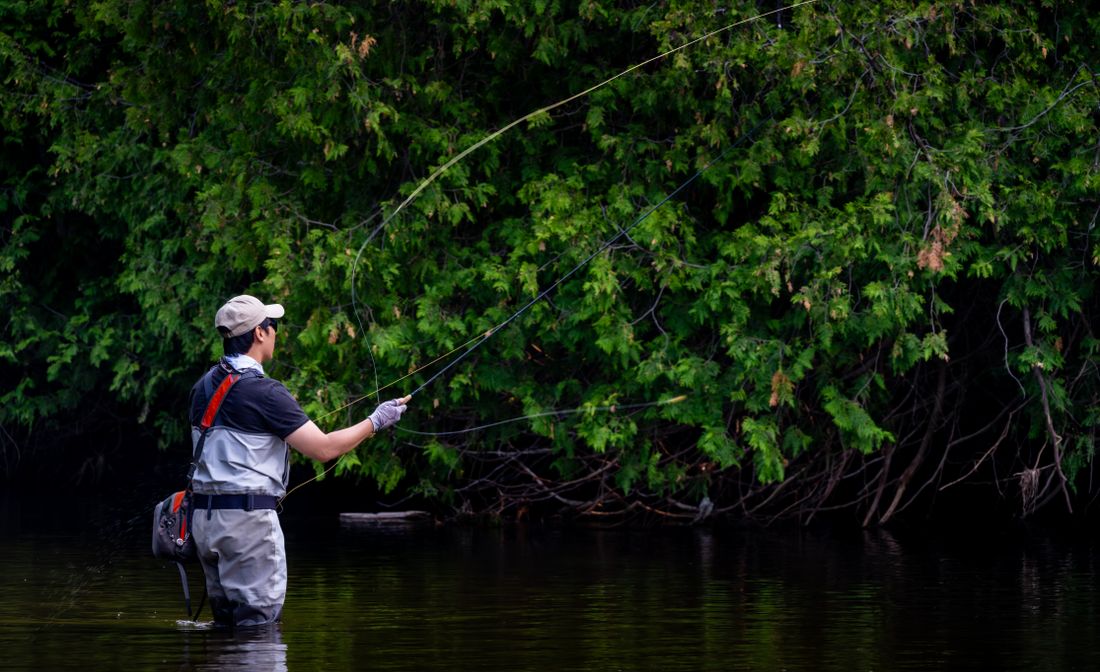
The South Platte is a chess match. Twelve-foot leaders, 7X tippet, size 22 midges, fish that refuse a perfect drift because the light caught your tippet at the wrong angle. That’s the game, and the reward is a wild, heavy brown that genuinely earned its caution. When it comes together, nothing’s better. When it doesn’t, you drive home rehearsing what you’d have changed.
A blue line is the opposite game. Nobody’s there. The whole drainage is yours, top to bottom, and the only nod you’ll exchange is with a moose you’d rather not have surprised. You don’t need a strike indicator or a hatch chart or a flow gauge — you need to walk in quietly and put a fly where a fish would obviously live. After a season of grinding technical water, that simplicity doesn’t feel like a step down. It feels like remembering the version of fly fishing you daydreamed about before you’d ever caught a trout, back when the whole thing was mysterious and you’d have been thrilled with a six-incher.
The fish are different (and that’s the deal)
I’ll be straight about the trade: the fish are small. A 10-inch brookie is a good one. A foot-long cutthroat is the fish of the trip, the one you’ll actually photograph. You are not going up there for size, and if size is what you need that day, point the truck back downhill — no shame in it.
You’re going for the takes. Wild creek trout aren’t educated, because nothing’s educated them. They’ve got a short feeding window, a lot of competition, and a hard winter coming, so they eat fast and they eat hard. A well-placed dry doesn’t get inspected; it gets crushed, often before it’s fully landed. And the fish themselves are absurd little jewels — native cutthroat with throat slashes like a knife cut, brookies lit up like a sunset somebody painted on a fish, browns the exact color of the streambed they were born over. These aren’t stockers killing time in a hatchery memory. They were born in that water and they belong to it, and holding one for two seconds before it bolts feels like being let in on a secret.
The gear gets gloriously simple
This is where my Scott F Series 3-weight finally earns its keep. A short glass rod — a 7-to-7½-foot 3-weight is the sweet spot, short enough to flick casts under the branches you’ll still manage to hook anyway — a click-pawl reel, one box of flies, and a net clipped to my pack. No vest full of rigs. No indicator. No split-shot tray rattling around like loose change. I can fit my entire blue-line operation in a sling I forget I’m wearing.
The fly box gets simple too. A few attractor dries, a couple of small nymphs to drop underneath, and — of course — a few Blowtorches, because that fly catches fish everywhere I take it and I’m not about to develop new trust issues now. Up on a creek I don’t overthink any of it. The fish aren’t grading my presentation. They just want to see the fly before their neighbor does, and on a good creek the competition is the only hatch chart you need. If you want the full small-water kit, I broke it down in blue-line gear and tactics.
The part nobody owes you: the finding
Here’s the thing about blue lines that took me a while to make peace with — the finding is half the point, and that means I’m not going to hand you GPS pins, and neither should anyone else.
It’s not gatekeeping. It’s the actual nature of the thing. A blue line is fragile in a way a tailwater isn’t. A famous river can absorb a hundred anglers a day; a thin creek with a fragile population of wild cutthroat can be meaningfully changed by ten people showing up because someone dropped a coordinate online. The reward is built out of the obscurity. Take the obscurity away and you’ve just made another crowded run with smaller fish.
So the move is to earn it. Pull up a topo, find the thin blue lines feeding water you already know holds trout, look for the ones a healthy walk from the nearest road, and go look. Most will disappoint you — too small, too warm, dry by August, fishless for reasons you’ll never fully understand. Some won’t. The ones that don’t become yours in a way no guidebook river ever can, precisely because you found them with your own boots. I wrote up the actual method — reading the map, the elevation and aspect clues, what separates a fishy creek from a wet ditch — in how to find blue lines in Colorado.
While you’re up there: tread light. Wild fish, fragile banks, no trash, and put them back wet-handed and quick. These places stay good because the few people who fish them treat them like they’re borrowed.
Why it matters
I’m not trading the tailwaters for blue lines. Deckers and the Dream Stream are still home water, and the technical game is still the one I respect most — the one that made me a real angler instead of a guy who owns rods. But somewhere in the last few seasons the grind started outweighing the joy on certain mornings, and a small creek full of wild fish feels like the reason I picked up a fly rod in the first place. It’s the reset button. It reminds me that under all the tippet math and hatch charts, this is supposed to be the most fun a person can have standing in cold water.
So this summer I’m chasing more of them. I’ll be writing about how I find them, how I fish them, and what I’m learning along the way — minus the GPS pins, because that’s not how blue lines work and you know it now too.
My take: If your fishing has started feeling like a high score to grind, go find a thin blue line and walk in. You’ll catch fewer fish, smaller fish, and have one of your best days of the season. I did not see that math coming either.
Are blue line trout worth the effort if they’re so small?
For most anglers, on most days — yes, but for reasons that have nothing to do with size. You trade big fish for solitude, willing fish, simple gear, and the satisfaction of water you found yourself. If you measure a day strictly in inches, blue lines will frustrate you. If you measure it in takes, scenery, and not seeing another human, they’re some of the best fishing in Colorado.
If you’ve only ever fished the famous water, go find a thin blue line on a map and walk in. It’ll remind you of something you forgot you knew.
And if you want the rod that earns its keep up there, here’s why I fish the Scott F Series 3-weight on small water.